Skip to content

Desk

A self-directed project using recycled plywood and steel to develop a corner desk.

Furniture Design

Year
2026
Duration
6 weeks
Medium
Wood, Metal, Recycled
Context
Self-led
Desk

Criteria and Design Development

Criteria:

  • Make the design flat pack, so it can be easily disassembled and moved. 
  • Design and make in a week.
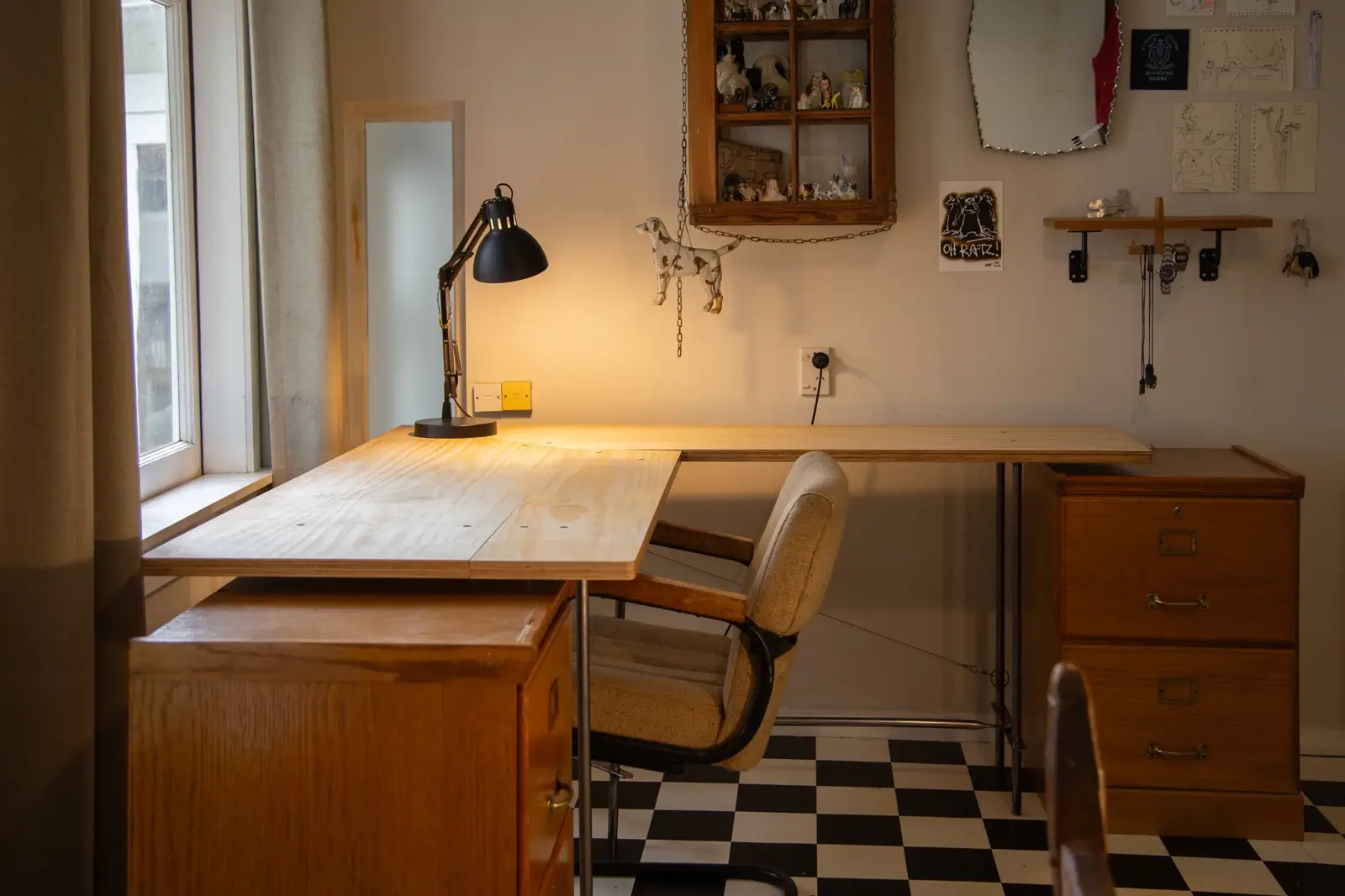
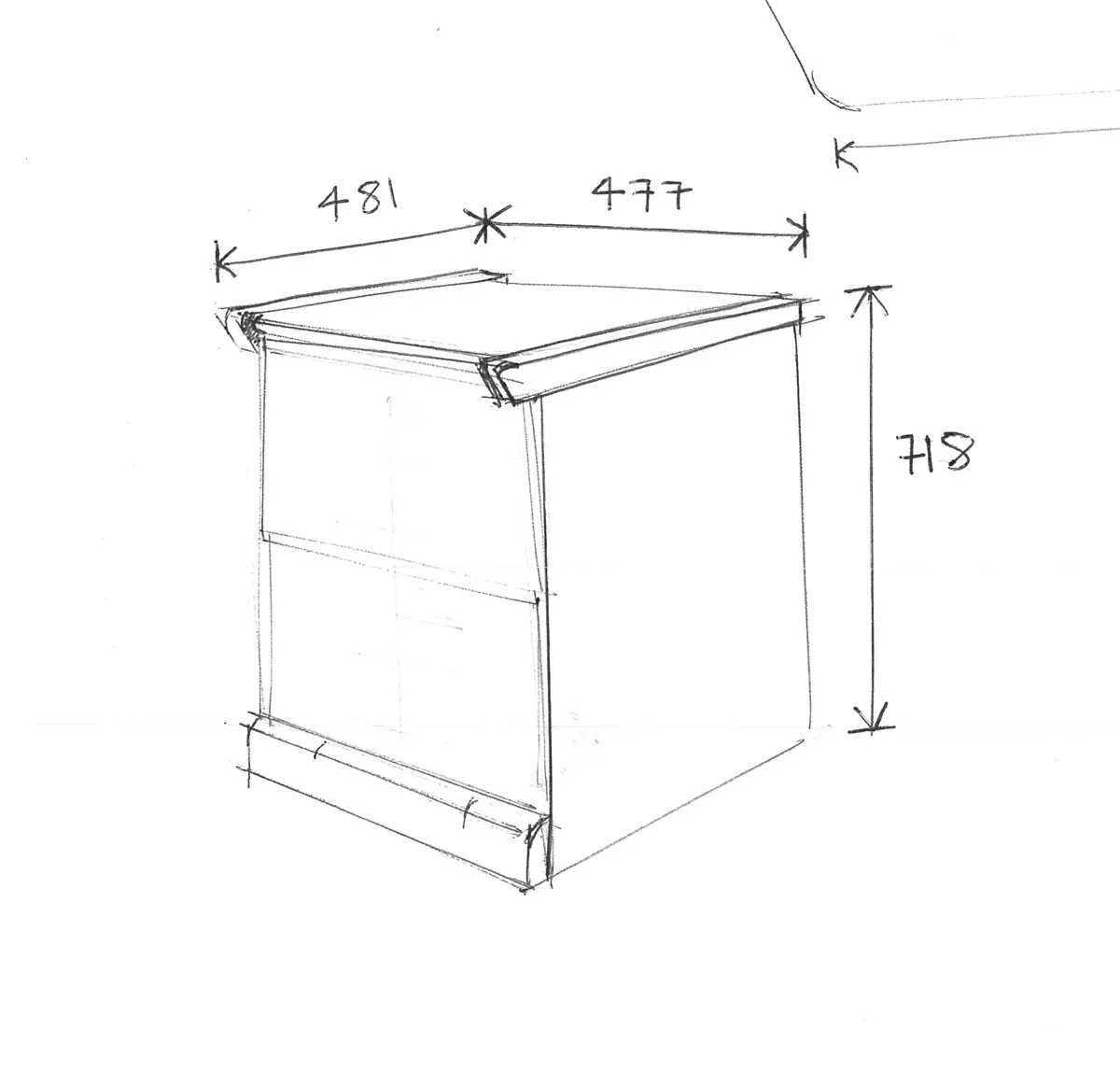
  • Design it to pair with my existing filing cabinets.
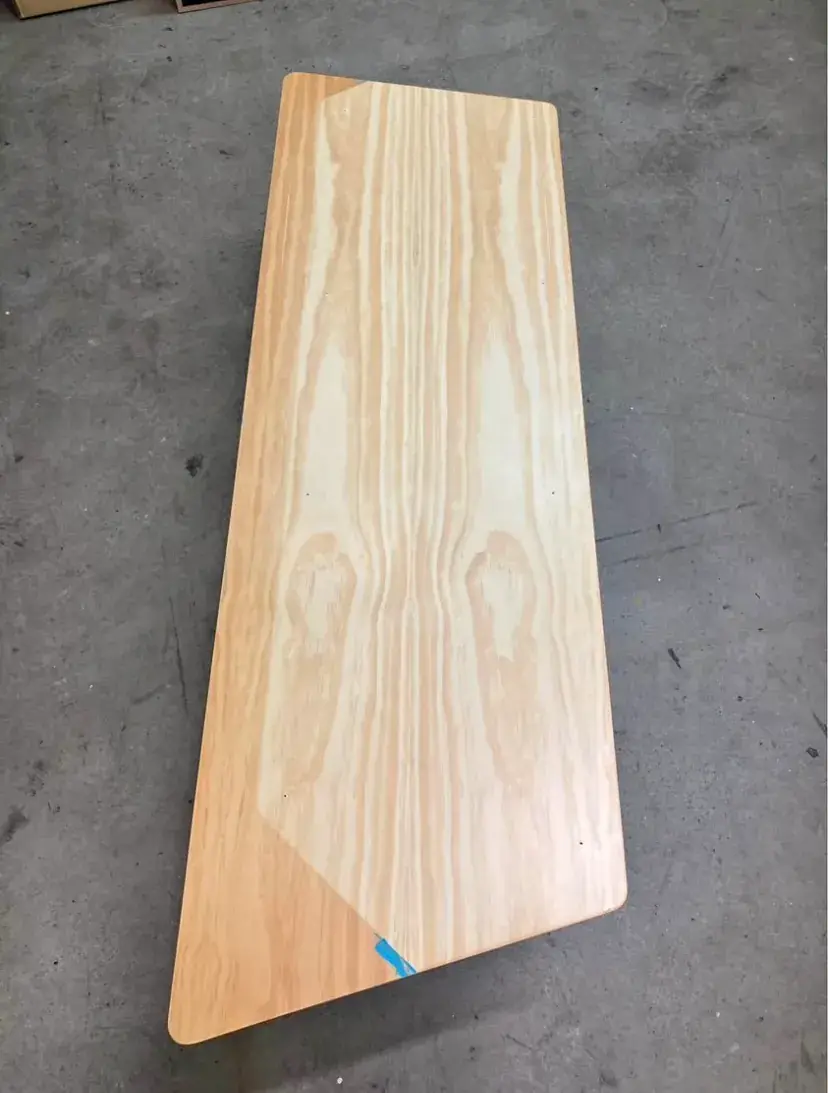
Second hand plywood
Bought 3 second-hand planks of 25mm thick plywood, each for only $10! Since this wood was previously used as shelving in a bike store, there were some minor limitations as compared to using new plywood. They were each cut into trapezoids, had a radius on all corners, the edges were painted, and both sides had received sun damage.

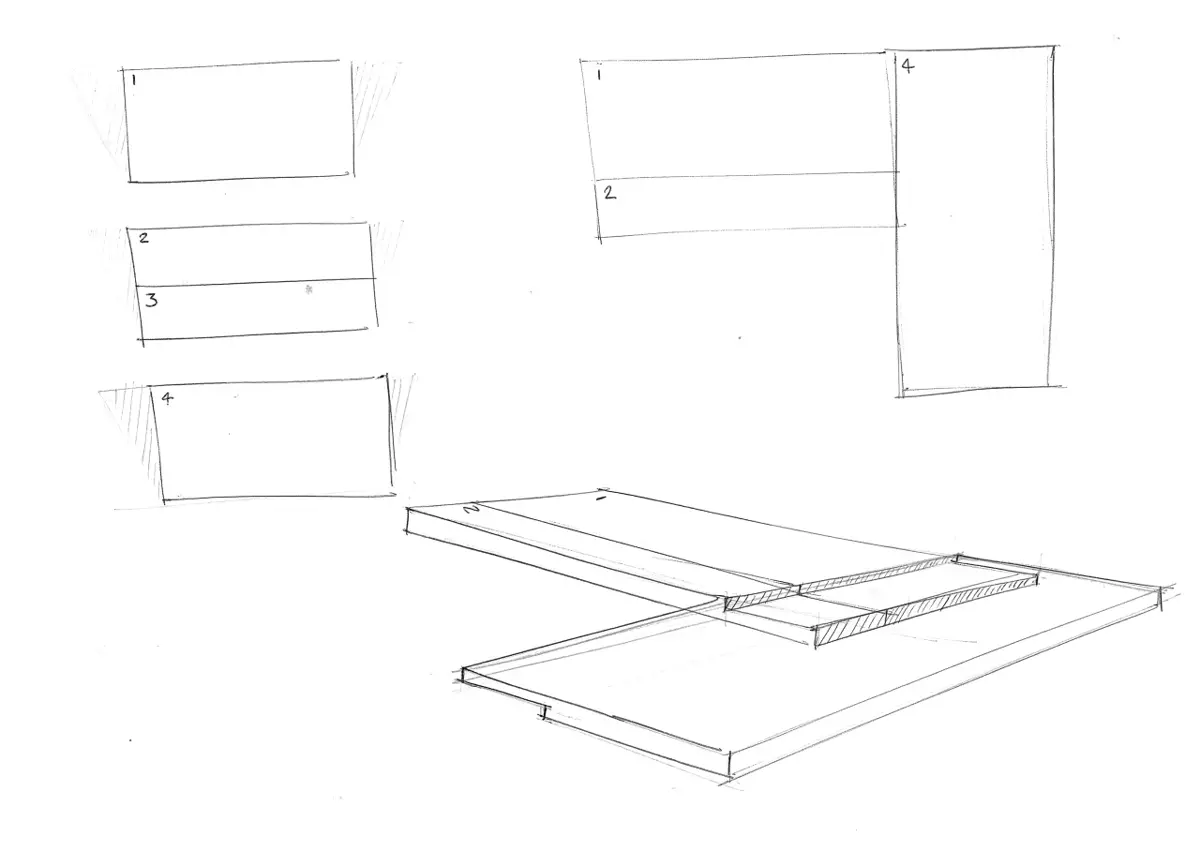
I already had two oak filing cabinets that I wanted to incorporate into the design. Designing with these cabinets transforms the desk into a full unit with storage. I spent a couple of days figuring out how I would connect three separate planks to make an L-shaped desk with minimal wastage. 

  • Using an overlapping join to connect the wood? 
  • Multi-levelled?
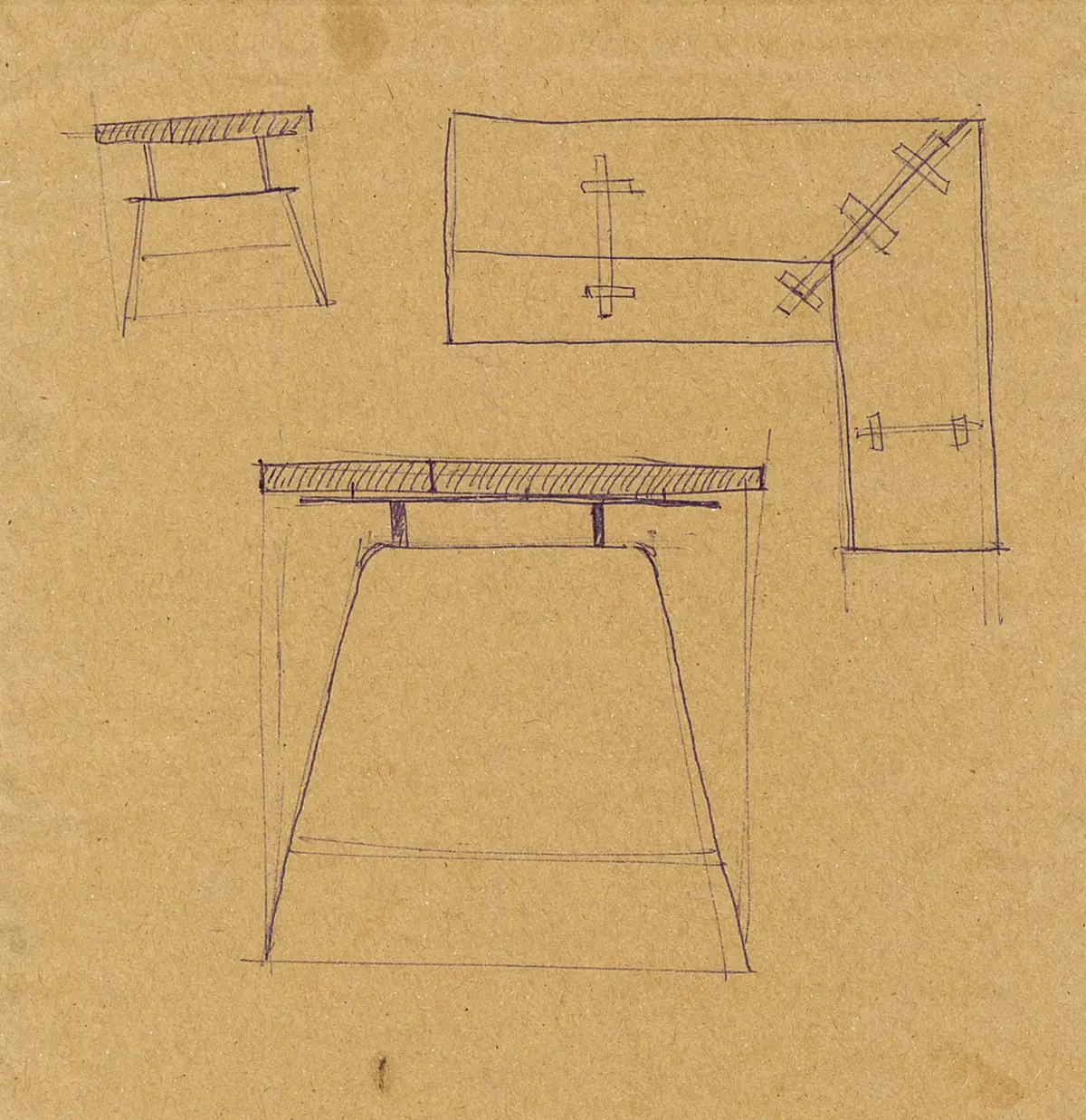
  • Using the legs as brackets?

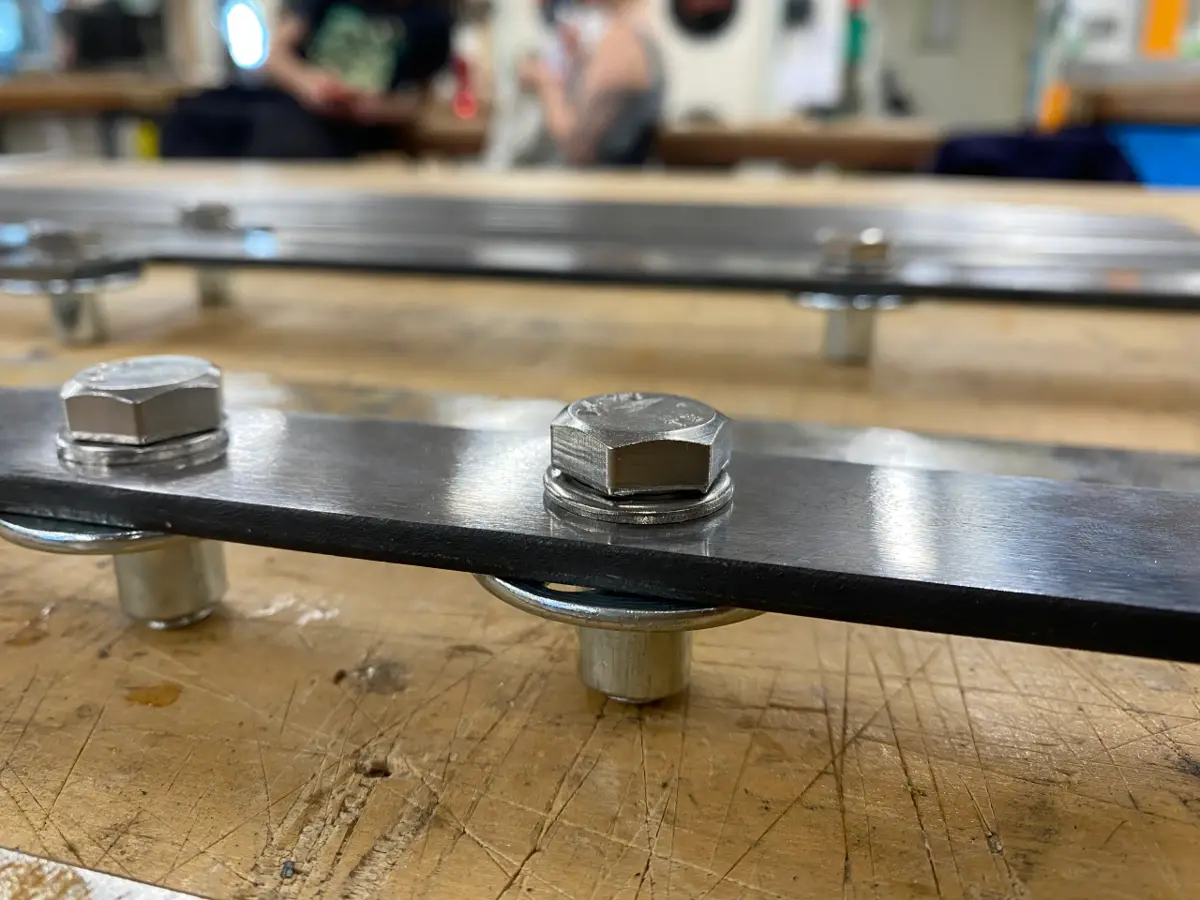
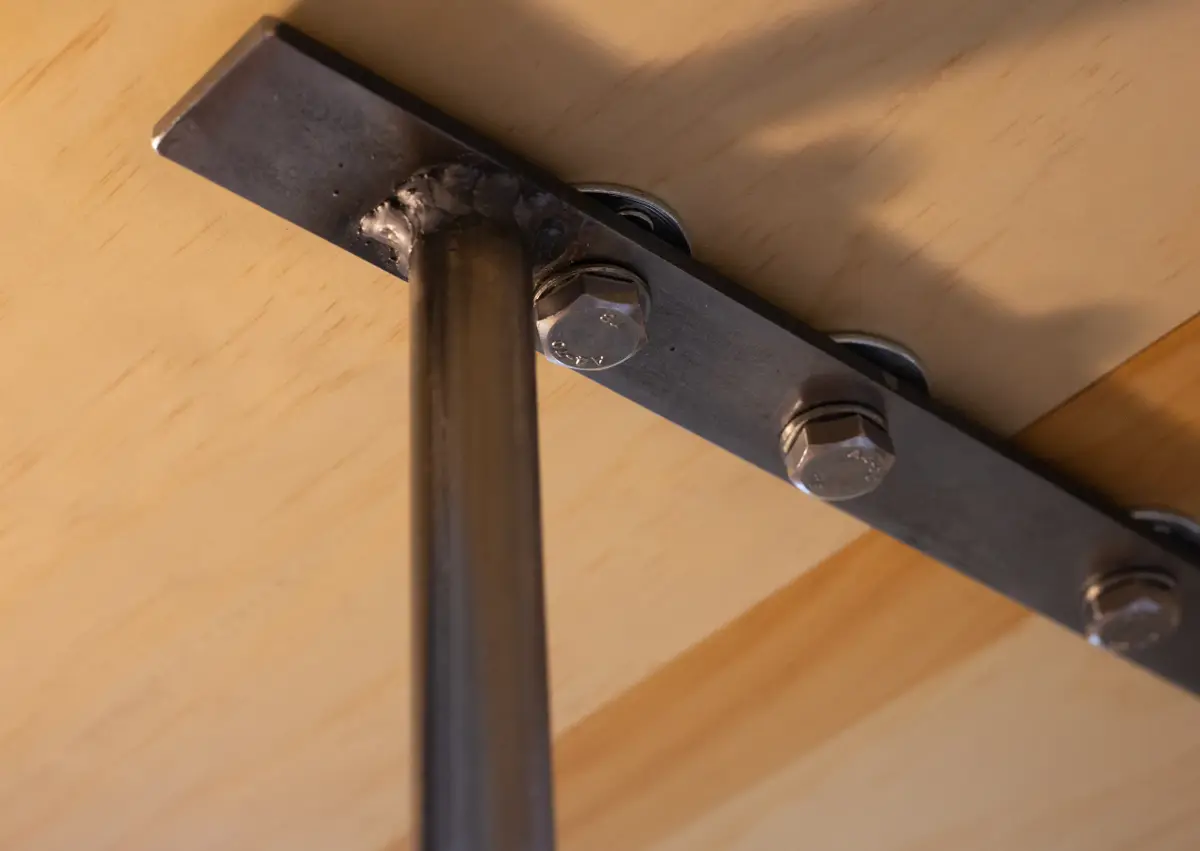
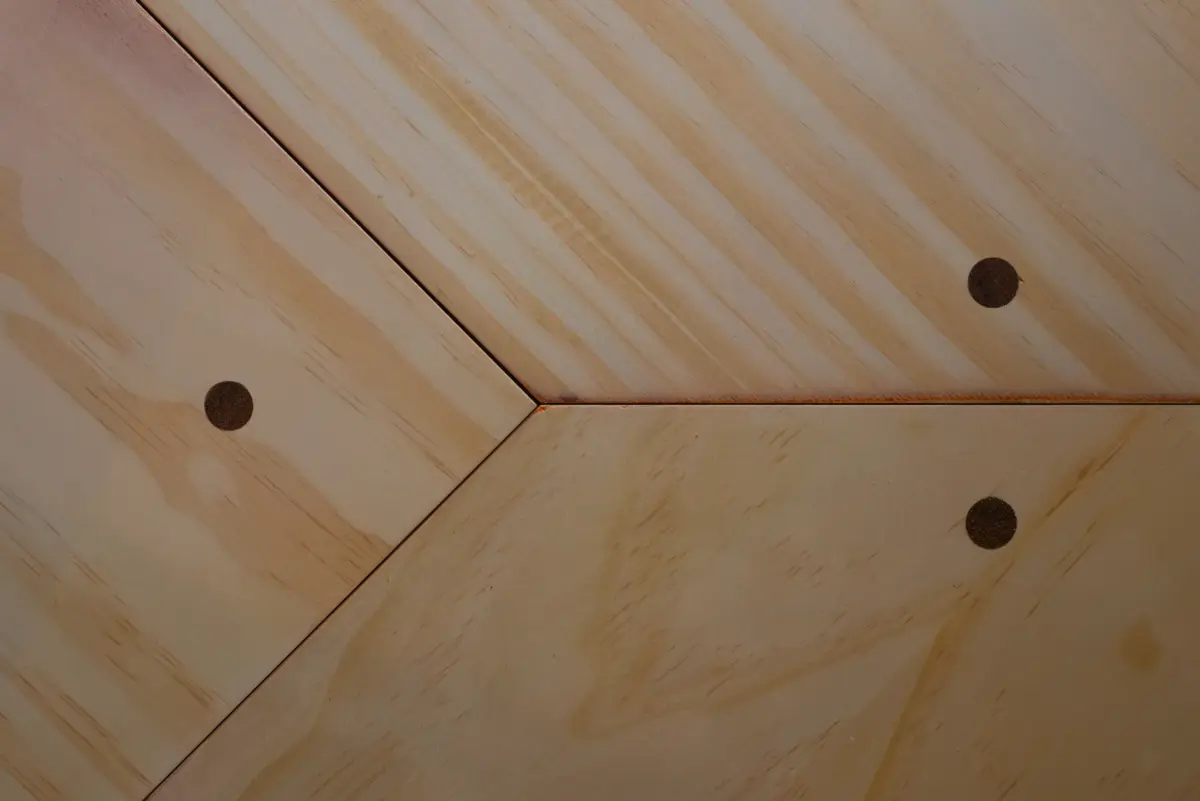
I didn't want to permanently join the plywood pieces together, as that would have made the design harder to transport when disassembled. I decided to use the legs as brackets for the plywood, utilising precision to impermanently keep the planks together. I used Brad hole T nuts in the underside of the plywood, allowing the legs to be bolted on and off an infinite number of times.

Fabrication
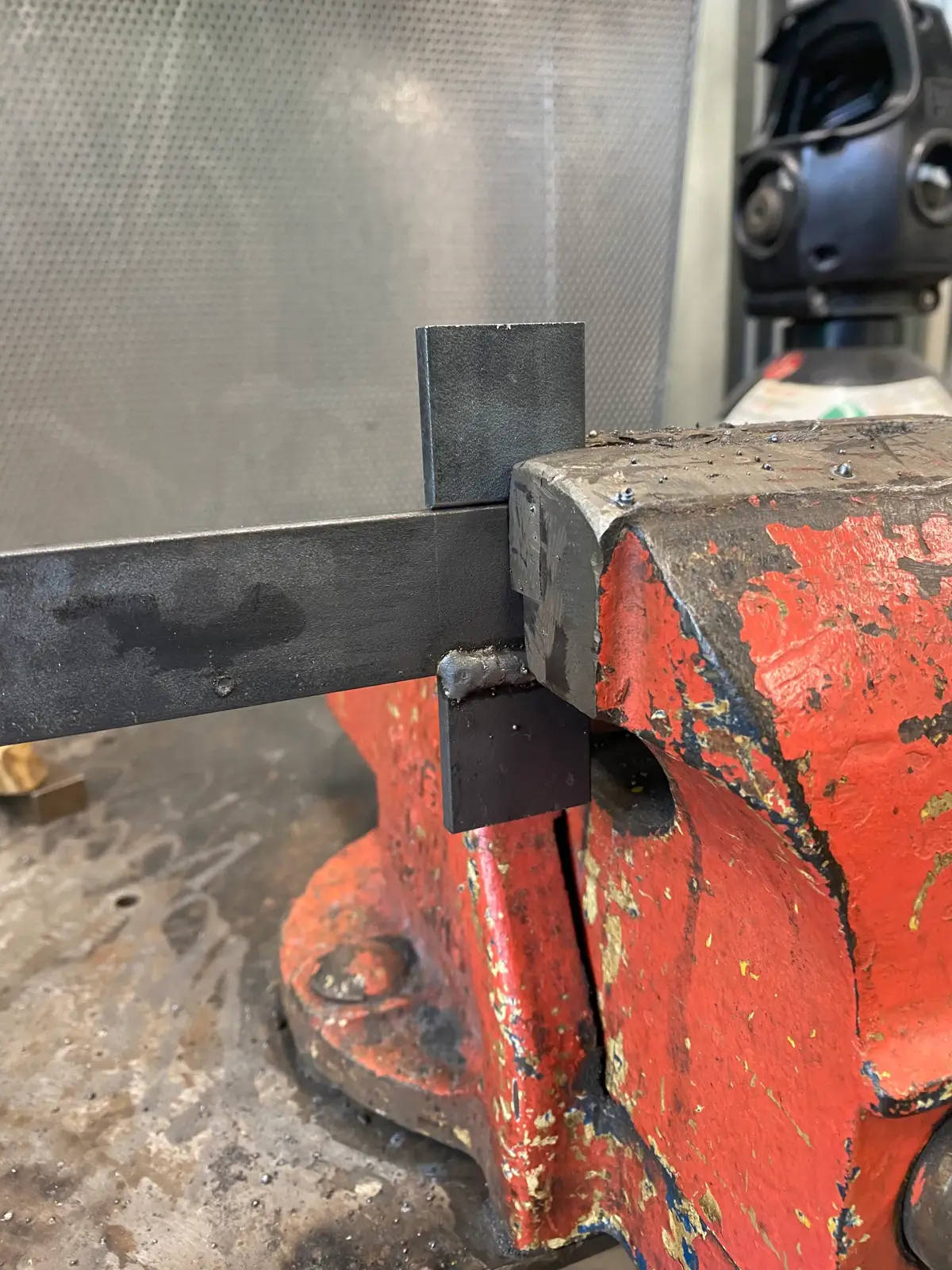
Parts of the legs
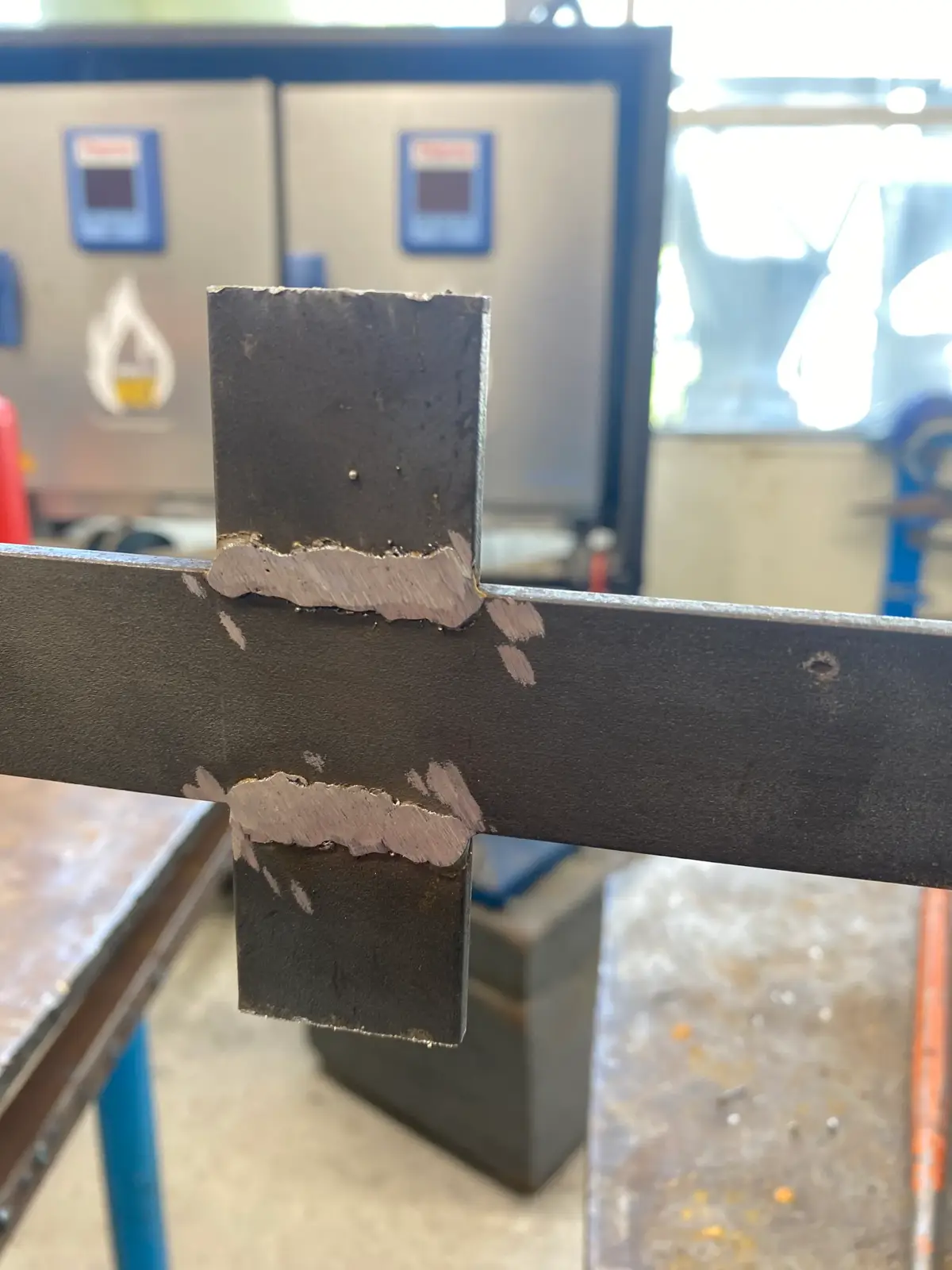
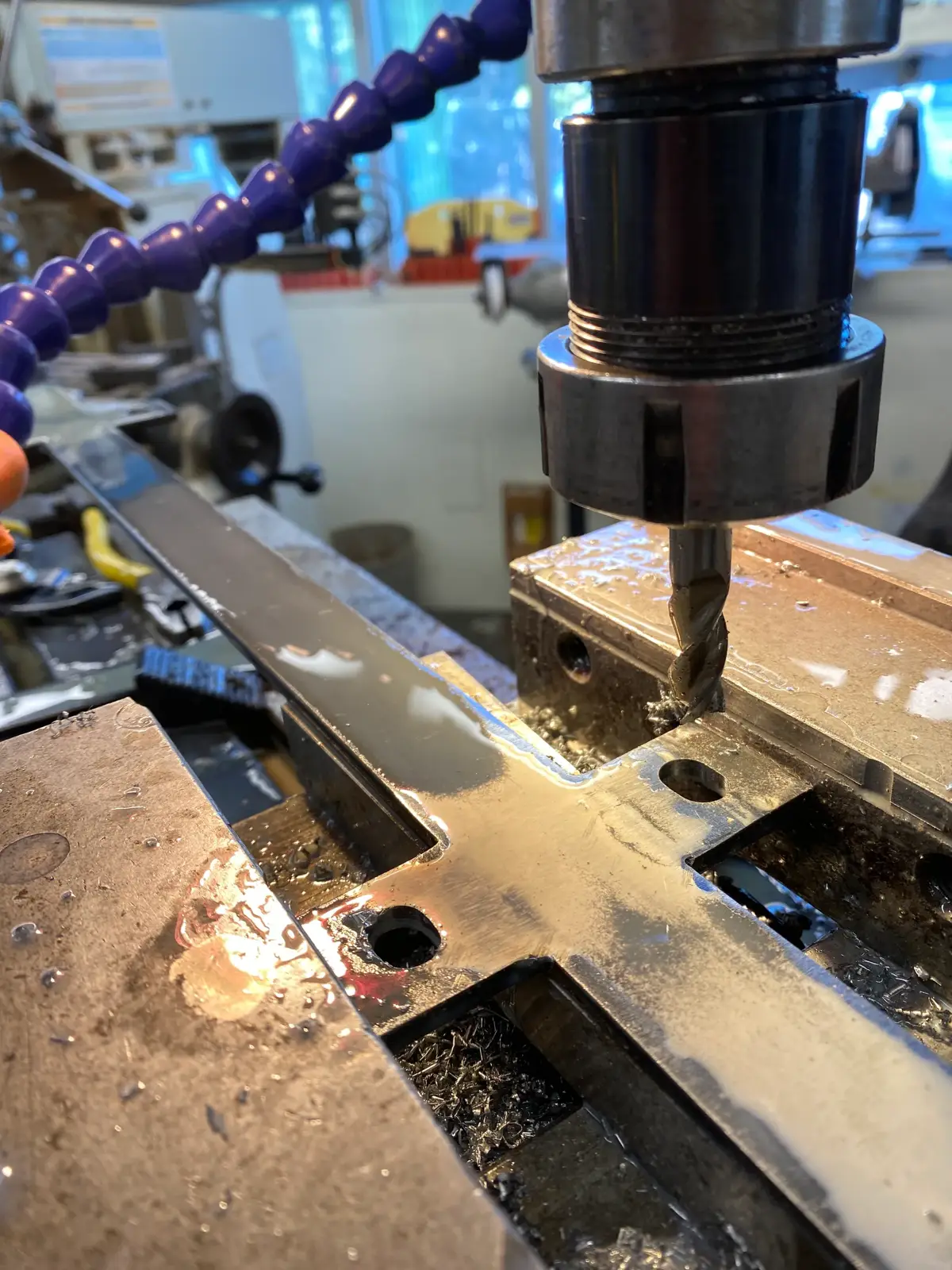
The legs consist of two vertical steel pipes, welded to a flat bar at the top with milled holes (for the bolts), and another vertical flat bar welded further down to avoid slanting.
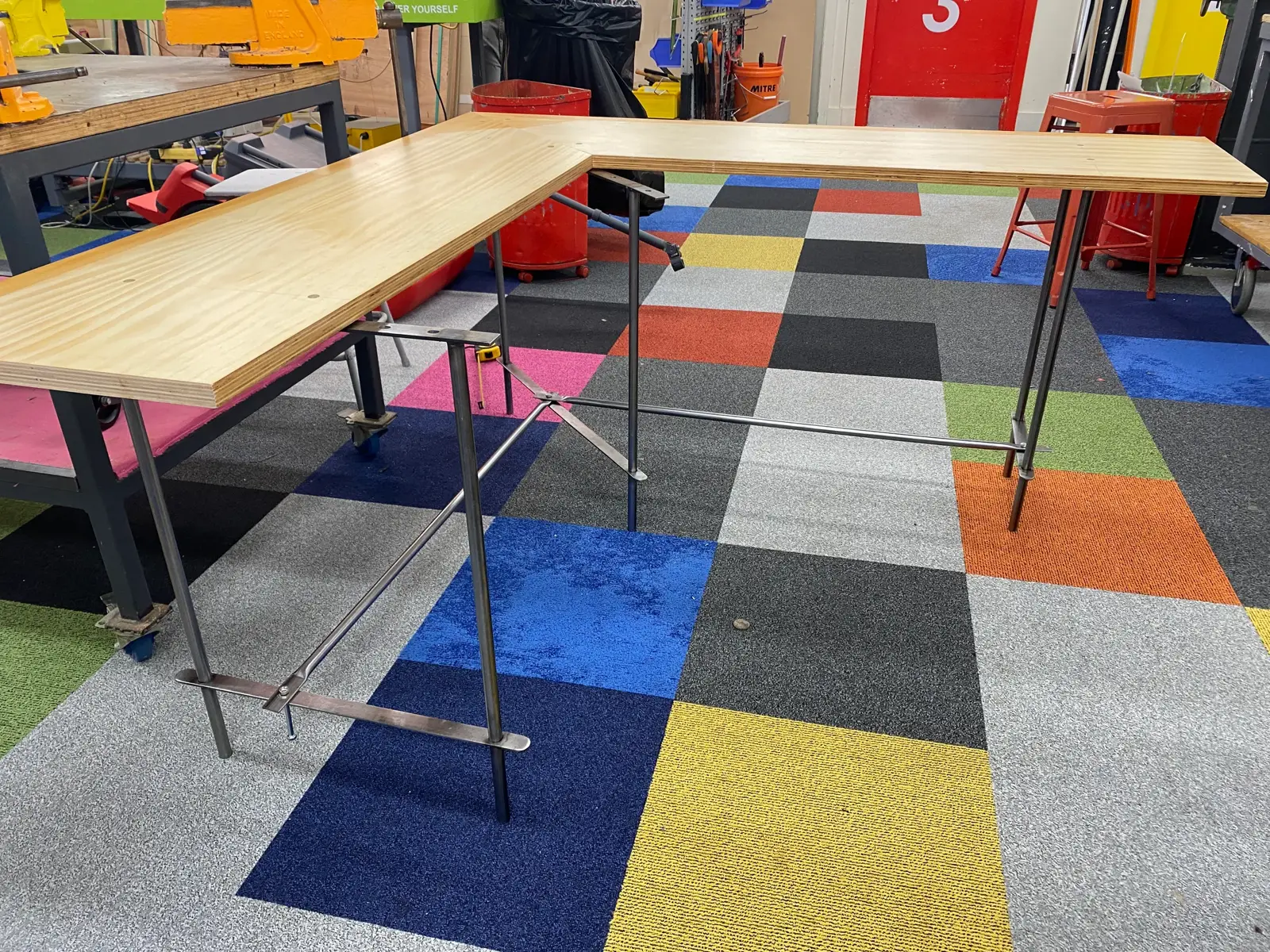
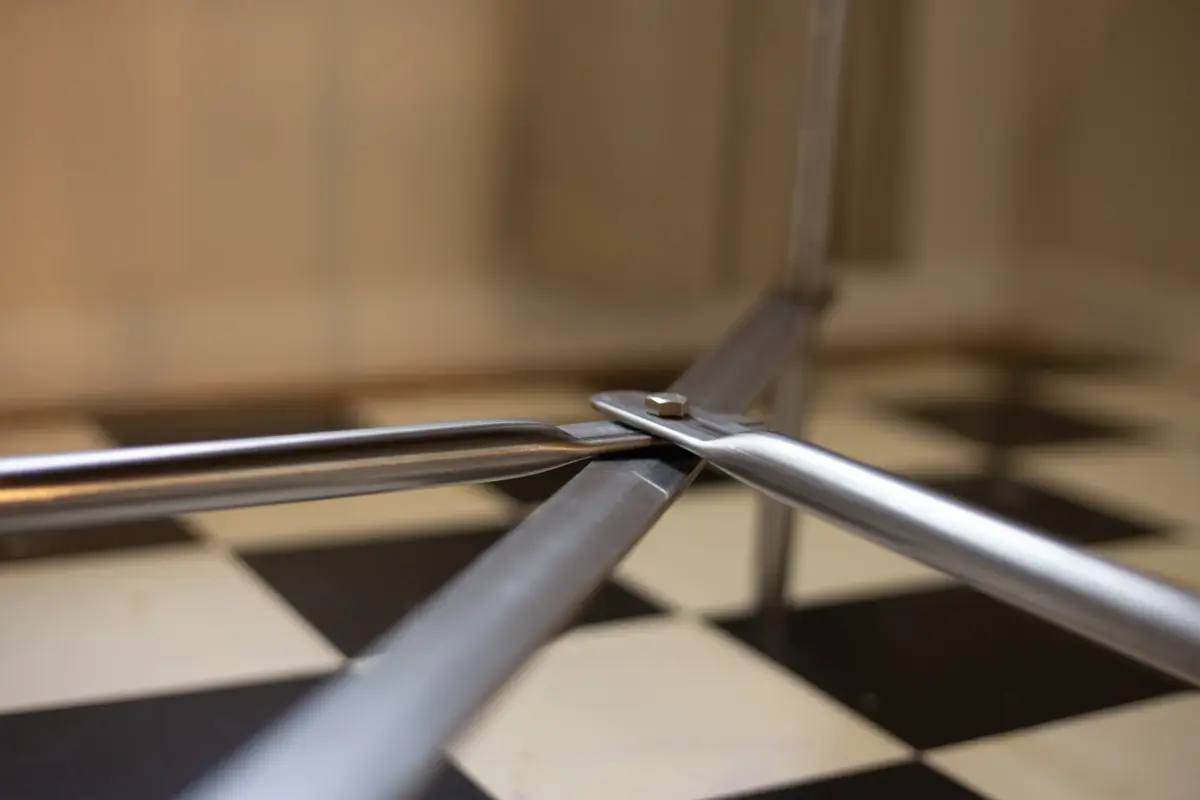
Due to the legs being 90° from the desk/floor, the legs were prone to swaying. I did consider making them angled for stability, but didn’t think it’d be possible with the time I had. To mitigate the problem, I made cross bars for the 3 sets of legs. Each end was flattened so they could bolt on.
Test fit! Still sways...
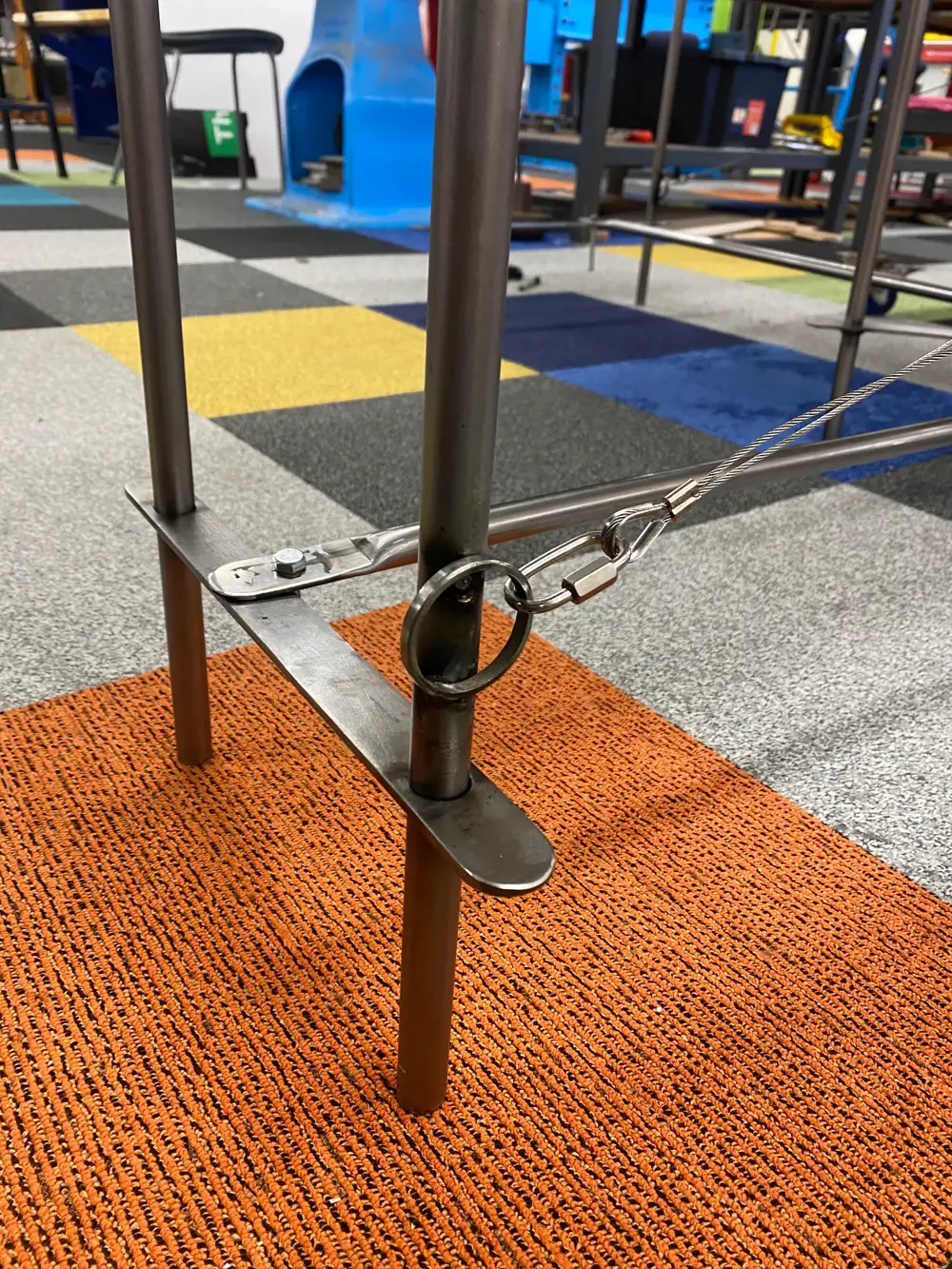
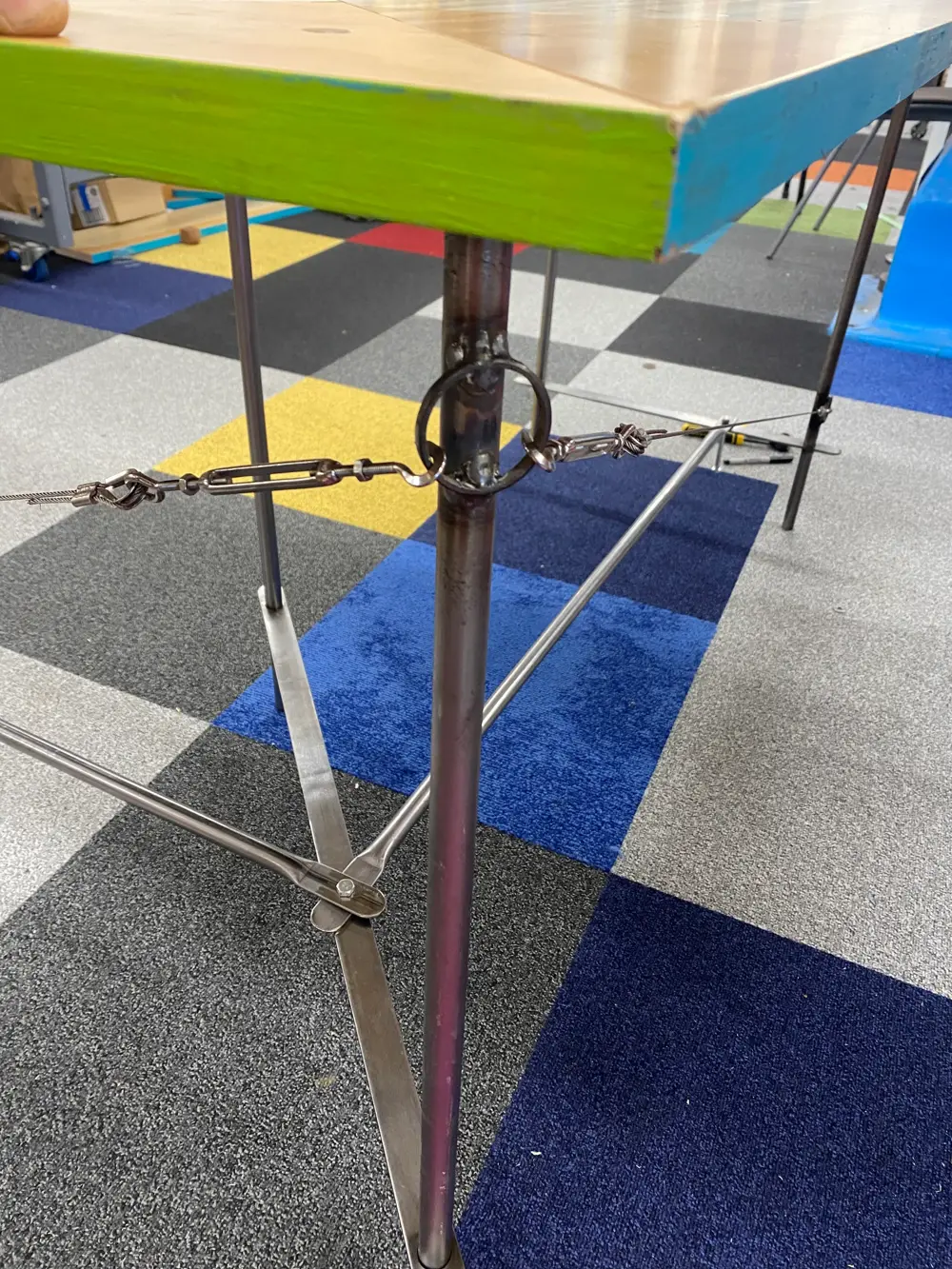
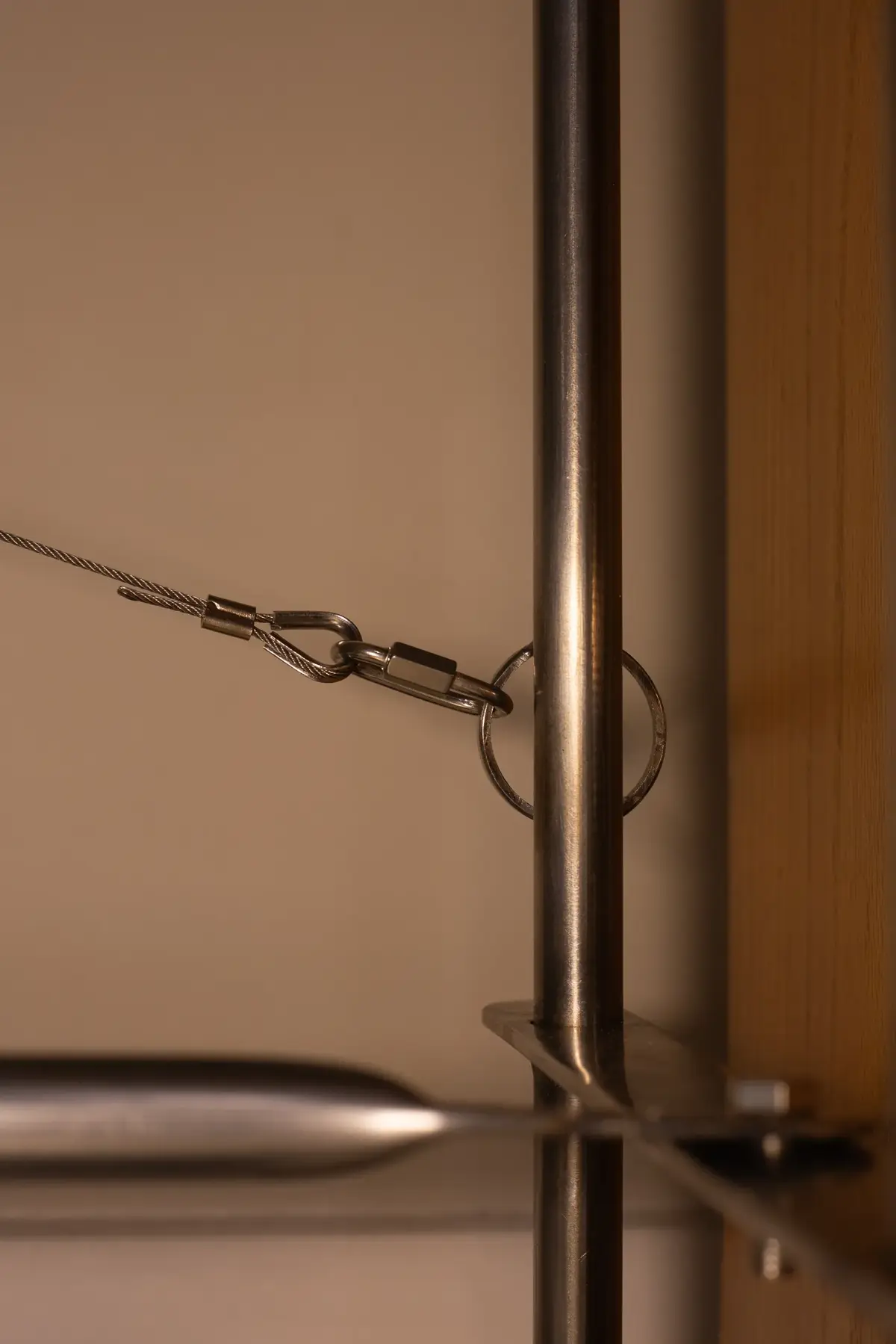
Unfortunately, the cross-bars weren’t enough to stop the swaying, so I had to hit the drawing board again. The solution I thought was the most obvious was to somehow incorporate triangles to increase tension and stability, but how? I considered wooden brackets, blocking out the negative space between legs, and diagonal crossbars between legs. All of these seemed to be too time-consuming and also not very aesthetic, so I decided to incorporate wire tensioning and turnbuckles.
Close-up view of a steel bracket and cable attachment on a metal desk prototype.
Close-up view of the steel frame and green plywood top of the corner desk prototype.
Install!

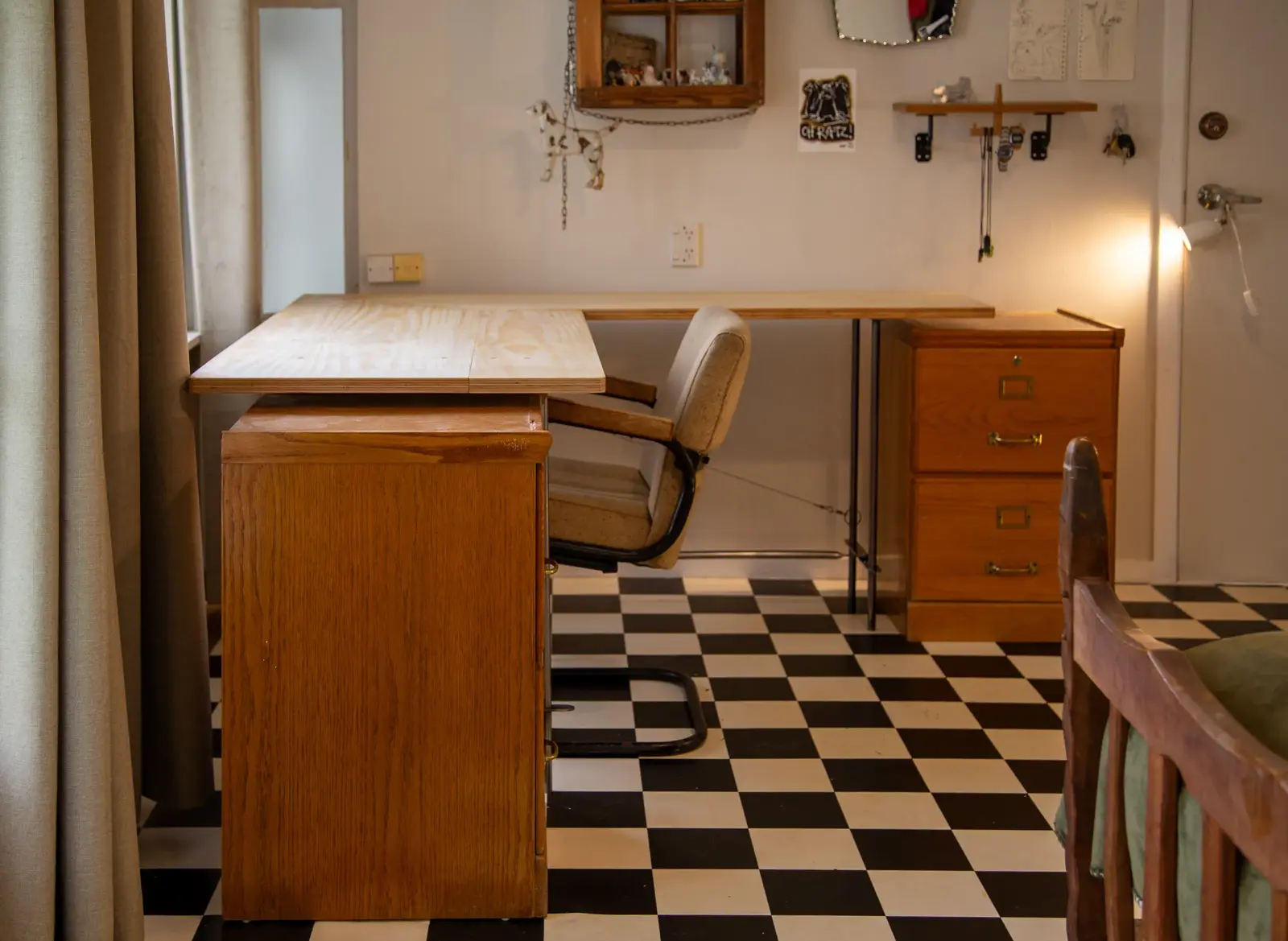
Final Design

A self-led corner desk featuring plywood and steel components in a room setting.