Tei
This lamp is a product of collaboration, from a class of 24 and was realised through an iterative process of visualisation, prototyping, screening and continual design review. The final resolved design was then manufactured, in a batch production of 28 identical lamps, boxed and ready for commercial release.
Lighting Design
- Year
- 2024
- Duration
- 12 weeks
- Role
- Project Manager, Concept Creator and Campaigner
- Mentor
- Rodney Adank, Michael Fleetwood-Jones
- Collaborators
- Adam Kan, Bella Carvell-Coles, Cameron McLeod, Cameron Murray, Cole Anderson, Corey Matheson, Enzo Gordon, Ian Smith, Jack Johansson, Joel Martin, Joji Dell, Josh Henshaw, Kaiyu Li, Karson Burns, Mae Rose-Wills, Mark Morris, Megan Uttley, Rebbeca McCulloch, Ruby Keegan, Rupert Shepherd, Sarina Oetgen, Theo Jones, Will Hadfield
- Tags
- Metal, Wood
- Context
- A semester-long group project focusing on product development and batch production.
- Link
- Best Awards
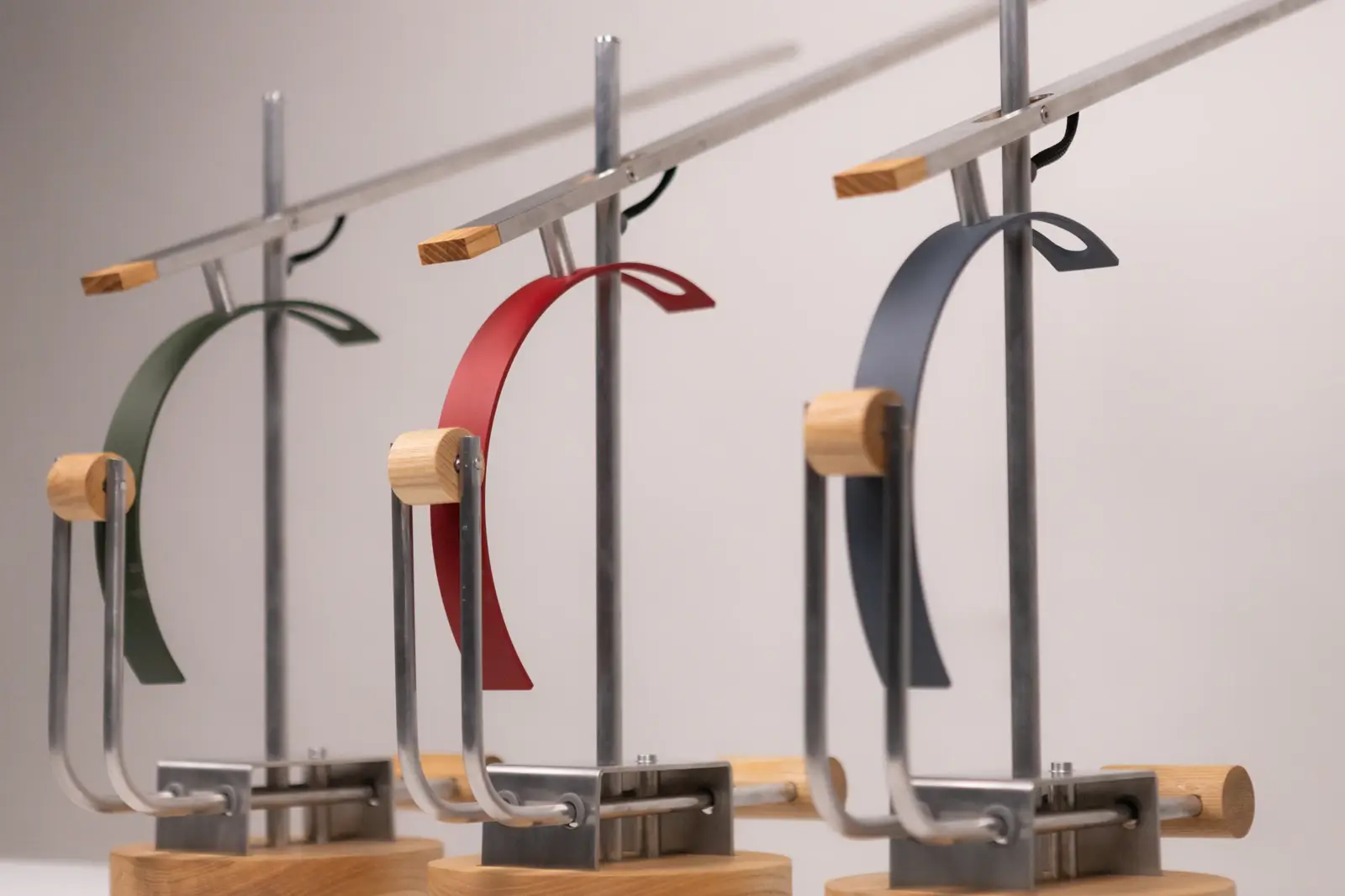
Final Design
Initial Development

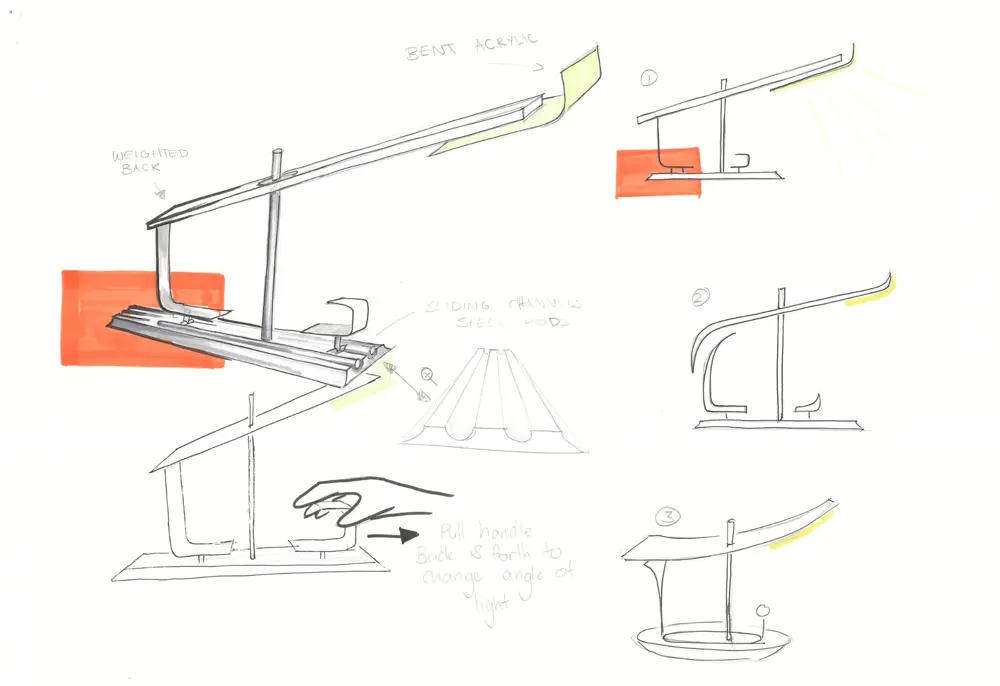
How can we make the back of the arm heavier so it holds in place?
How can we avoid using glue?
What's a simple yet effective way of diffusing the light source?
After 3 weeks of development, the concept was selected for batch production. This meant our whole class of 24 students had to jump on board to refine the design so it could be batch-produced in 28 identical, boxed units, ready for commercial release.
Concept Development and Batch Production
With my team's design being selected for development, my role in the project grew. Developing and refining the design was my top priority; however, maintaining good communication and time management were more important than ever.

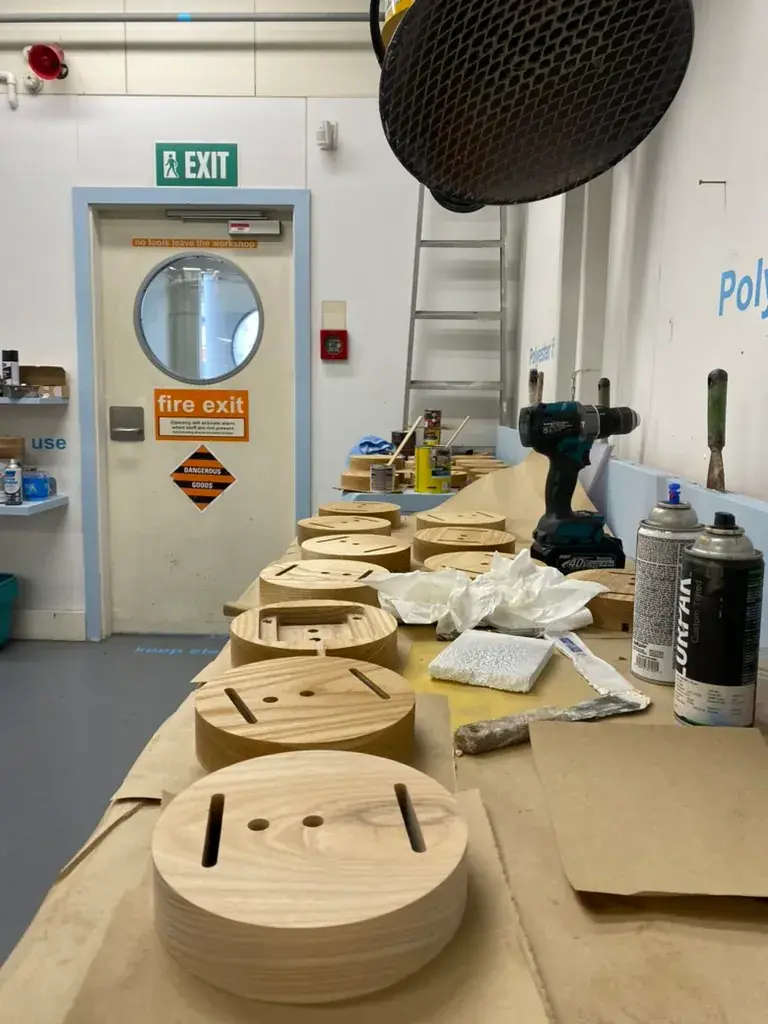
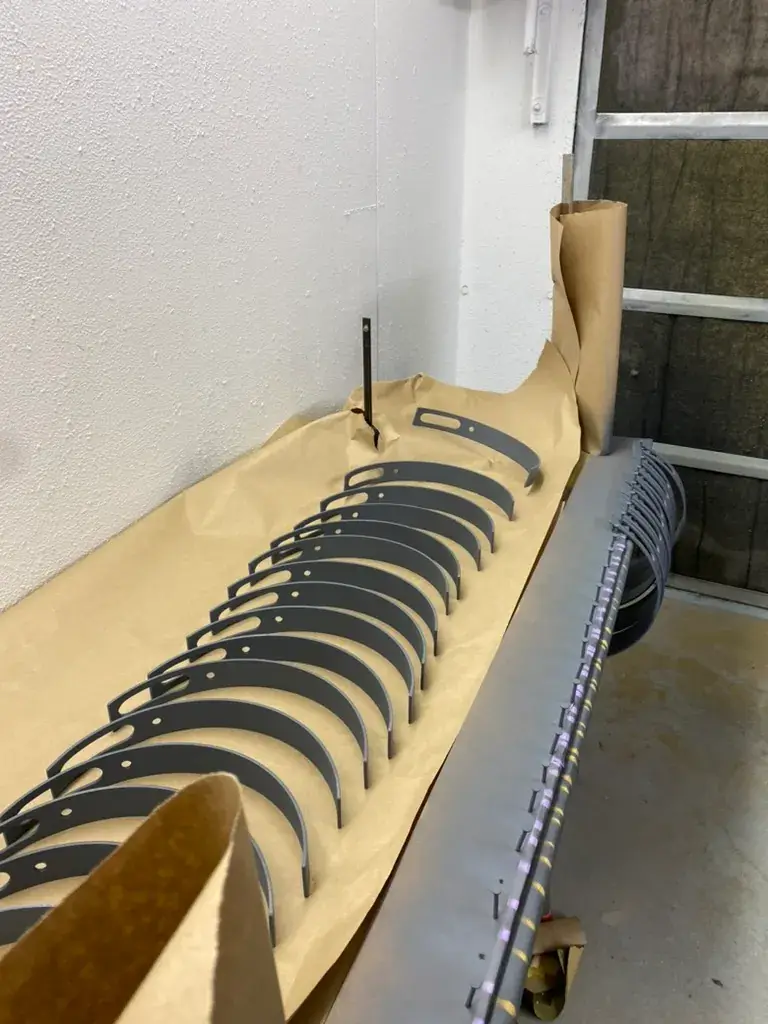
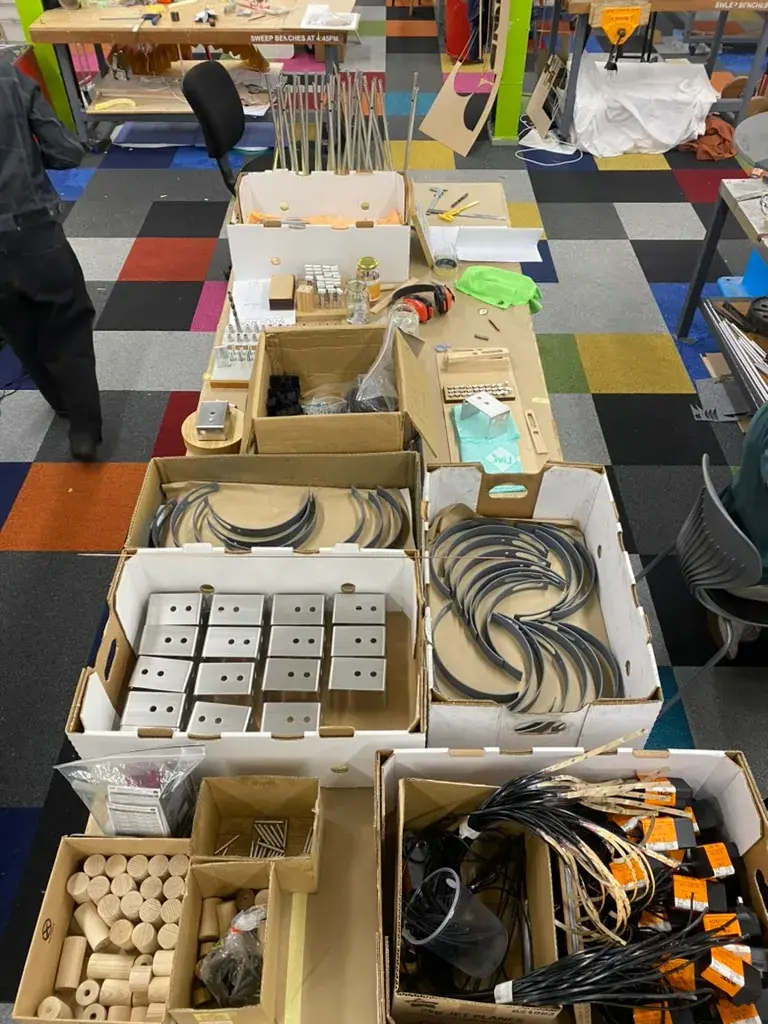
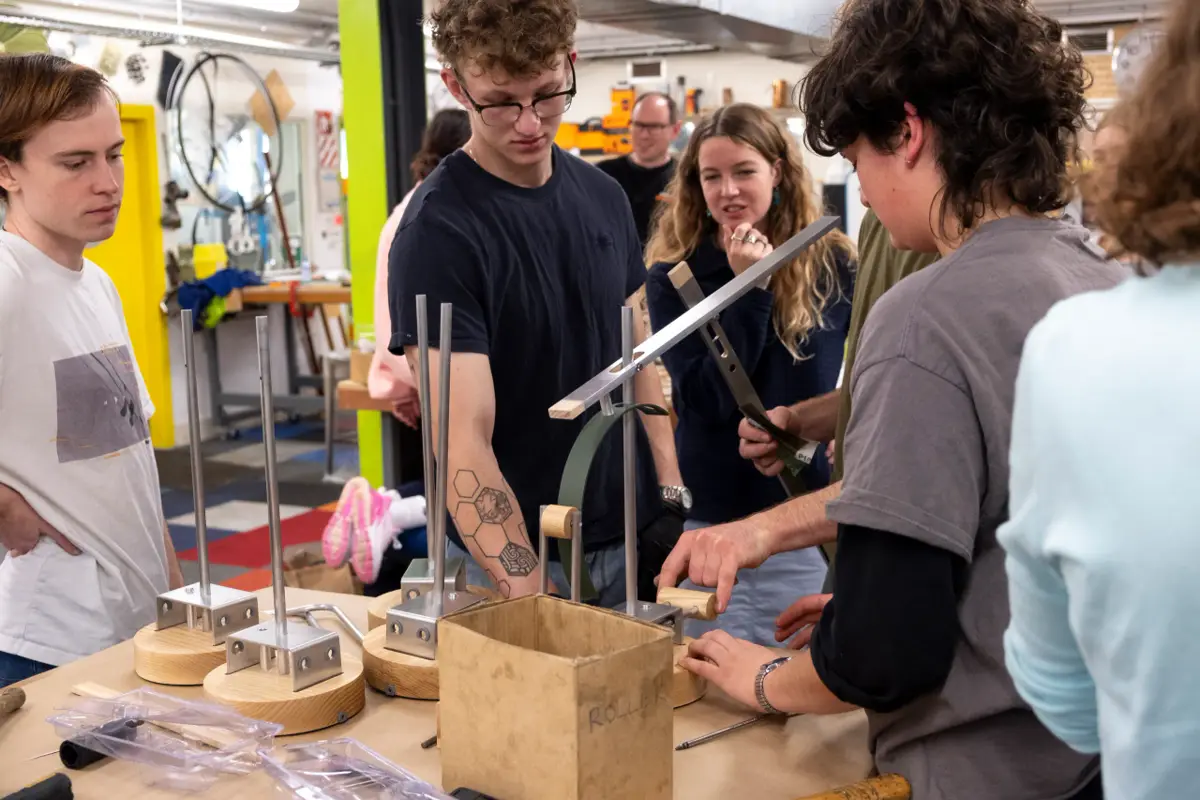
The manufacturing process relied on multiple machines, with techniques and guidance from our wonderful technicians.
- Water jet cutting
- CNC
- 3D Printing
- Laser cutting
- Wood and metal lathe
- Mill
- Metal bending
- Tapping
- Sanding and polishing
- Spray painting
Final Design

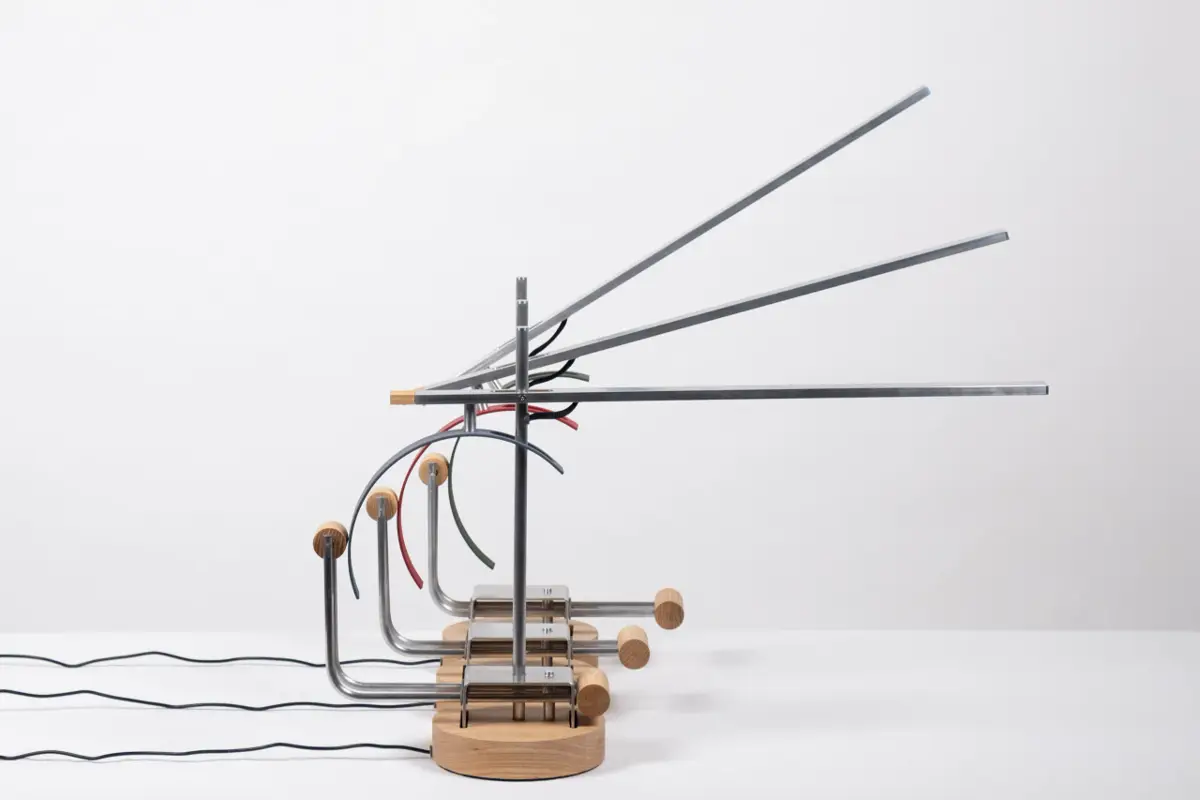
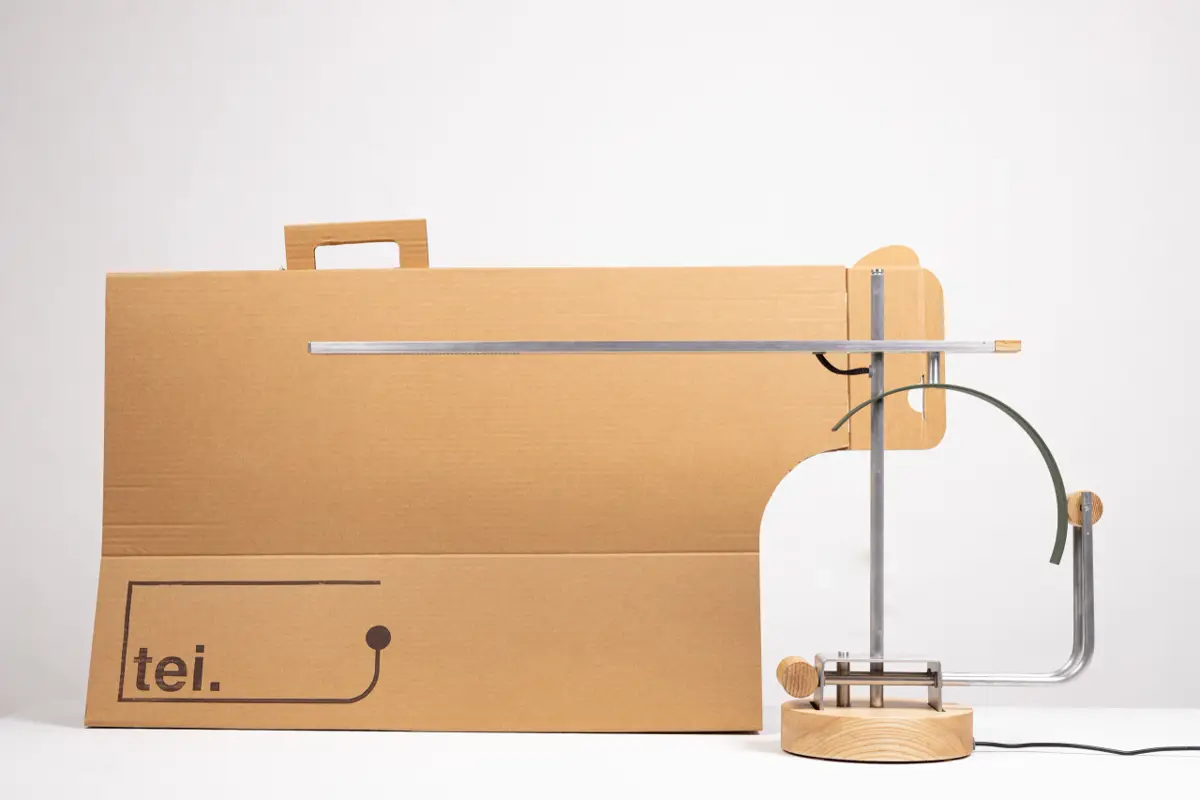
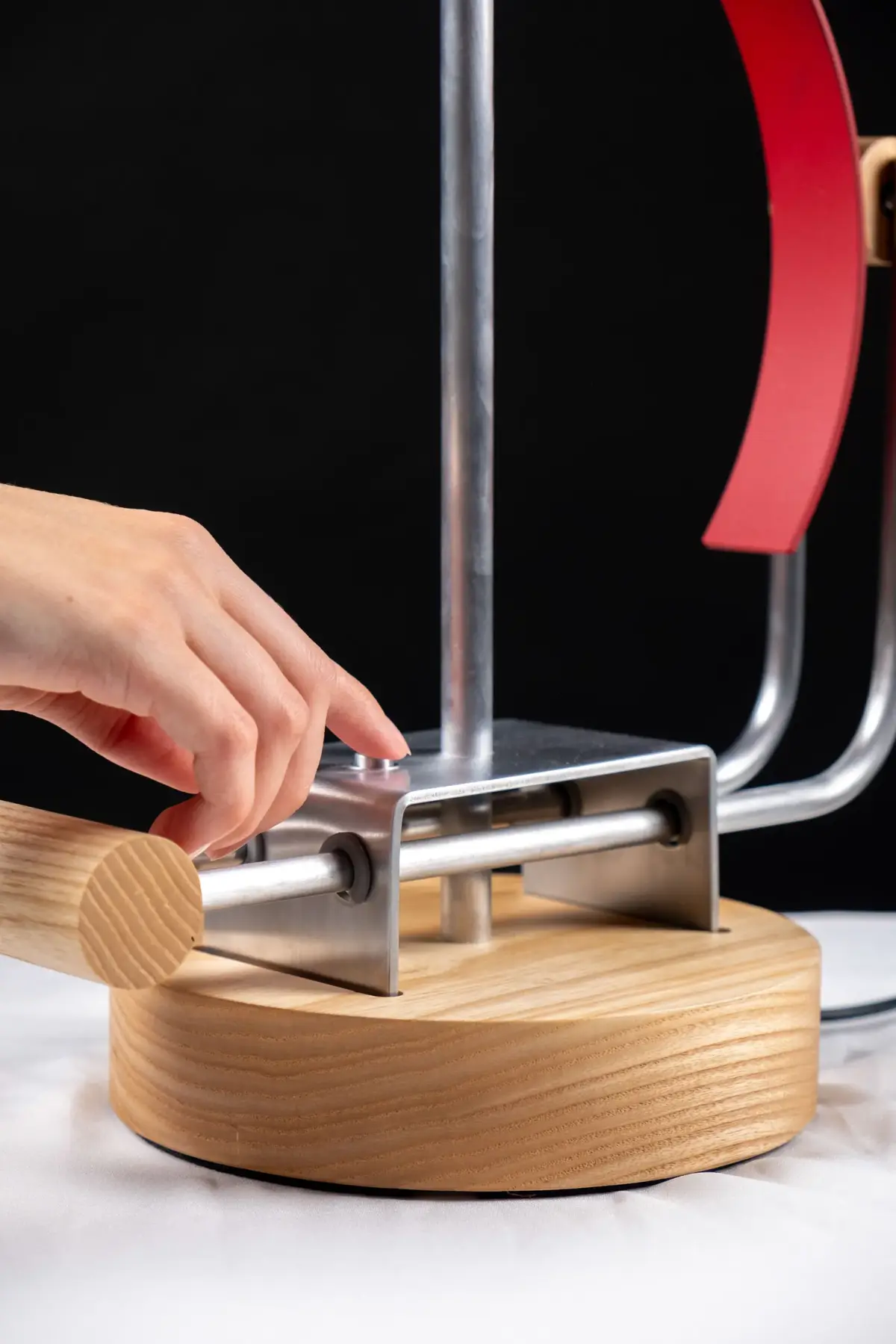
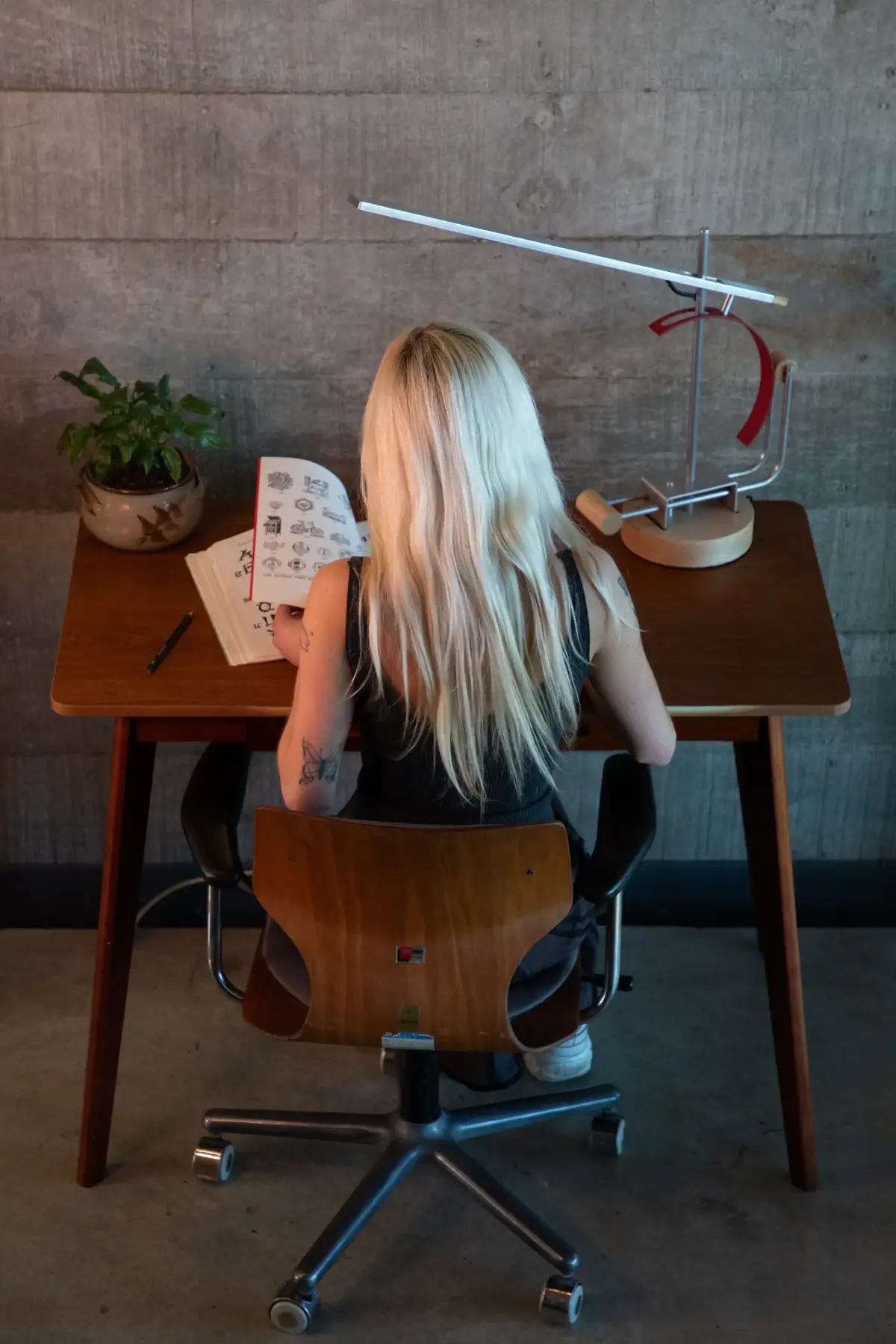
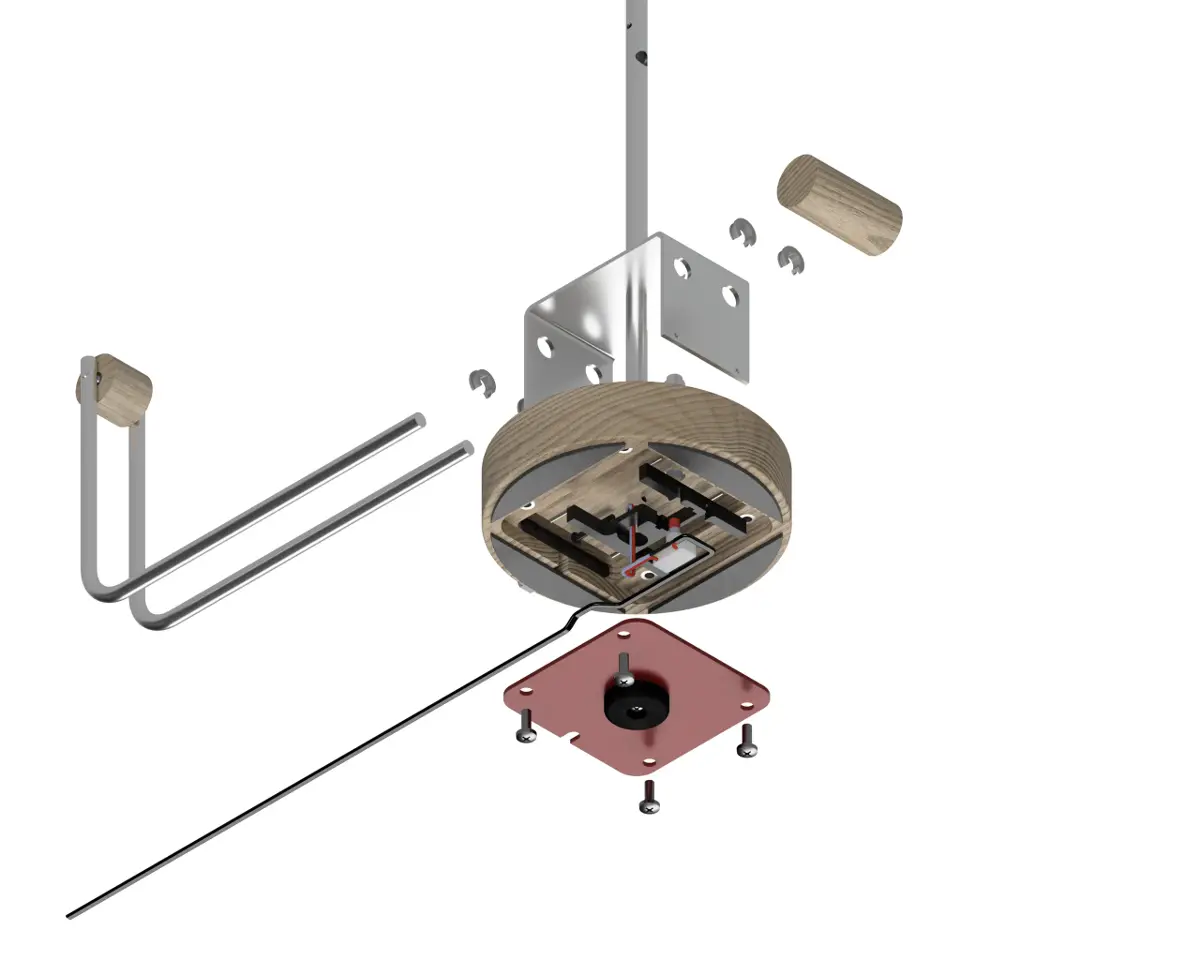
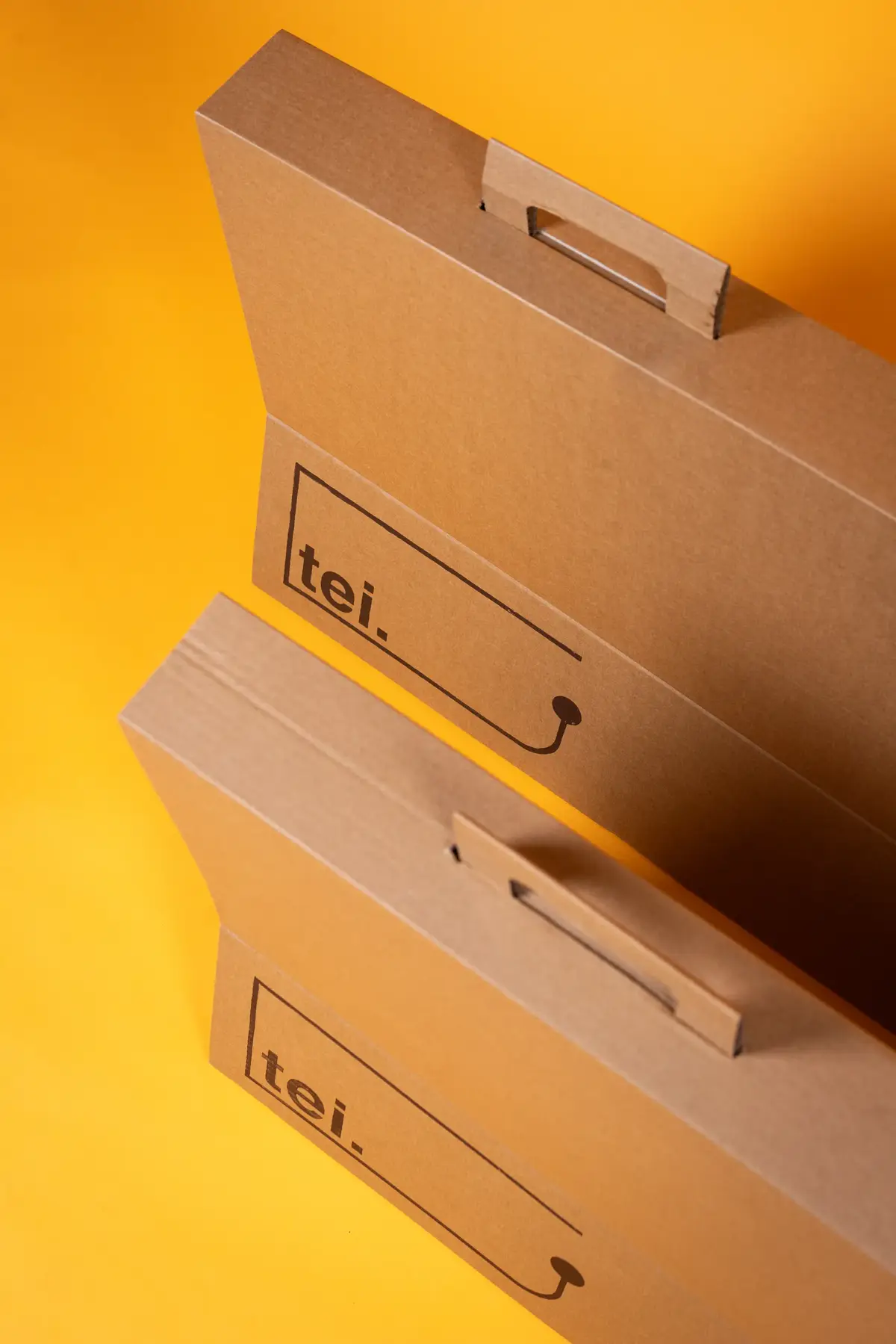
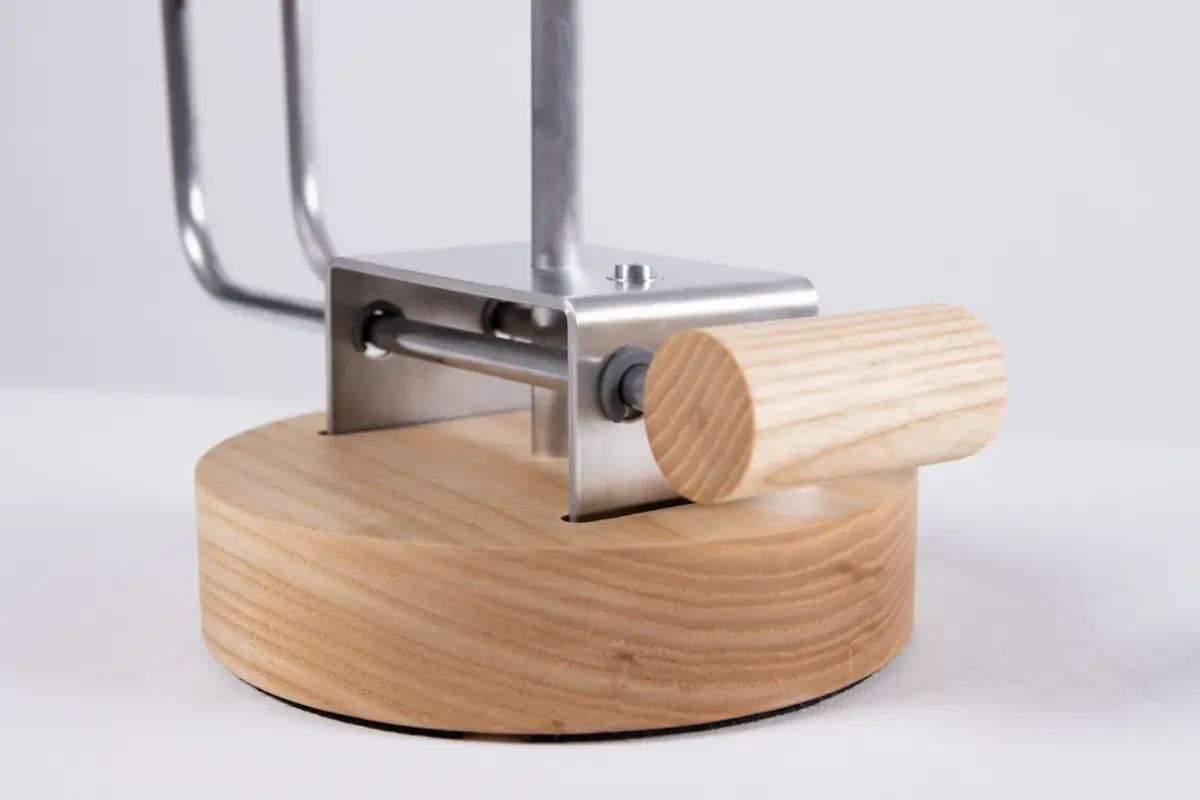
Images by Cameron Murray, Tia Aston and Sarina Oetgen.
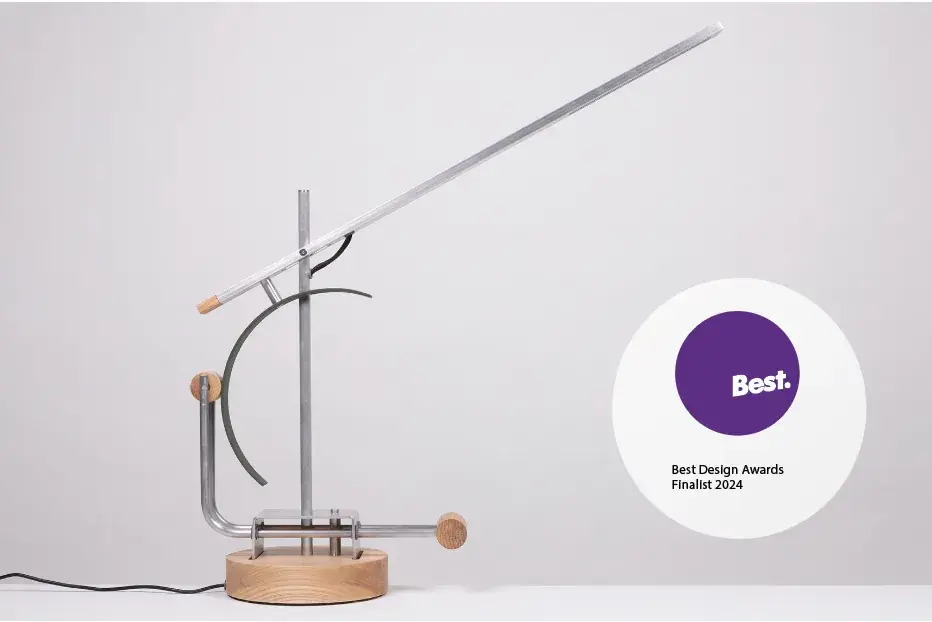
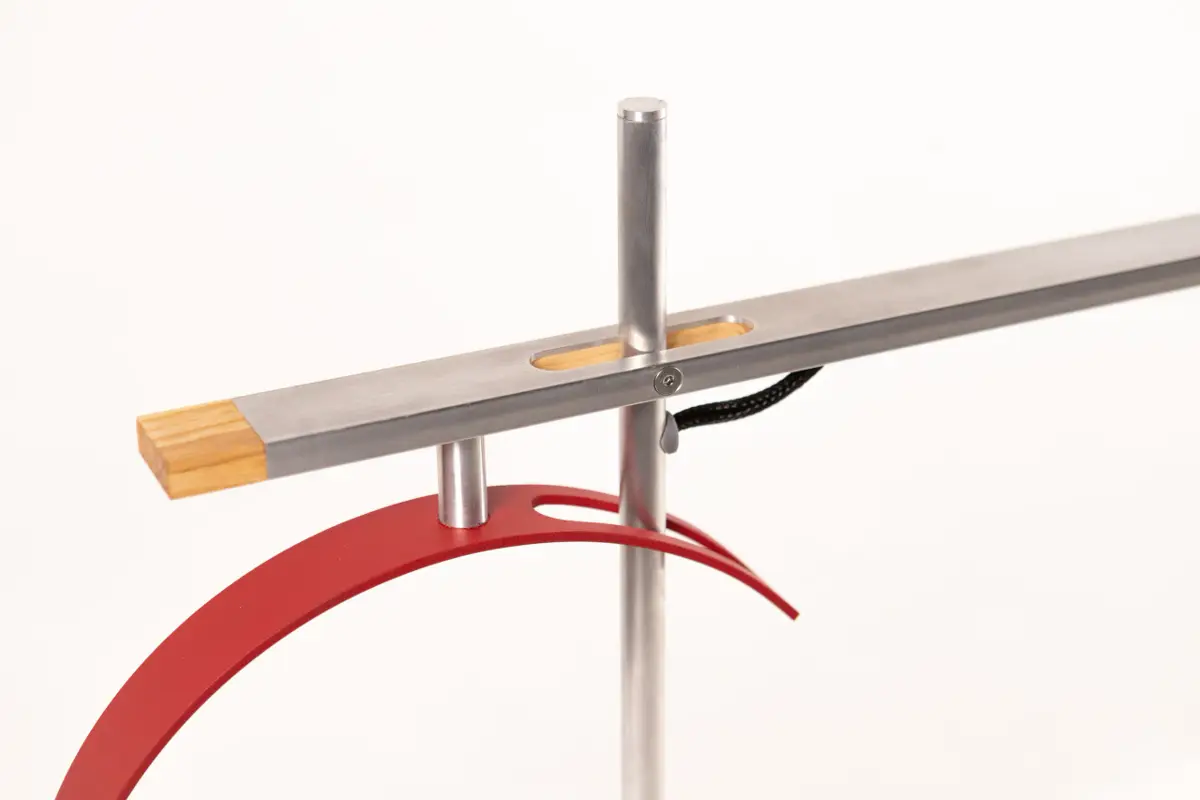
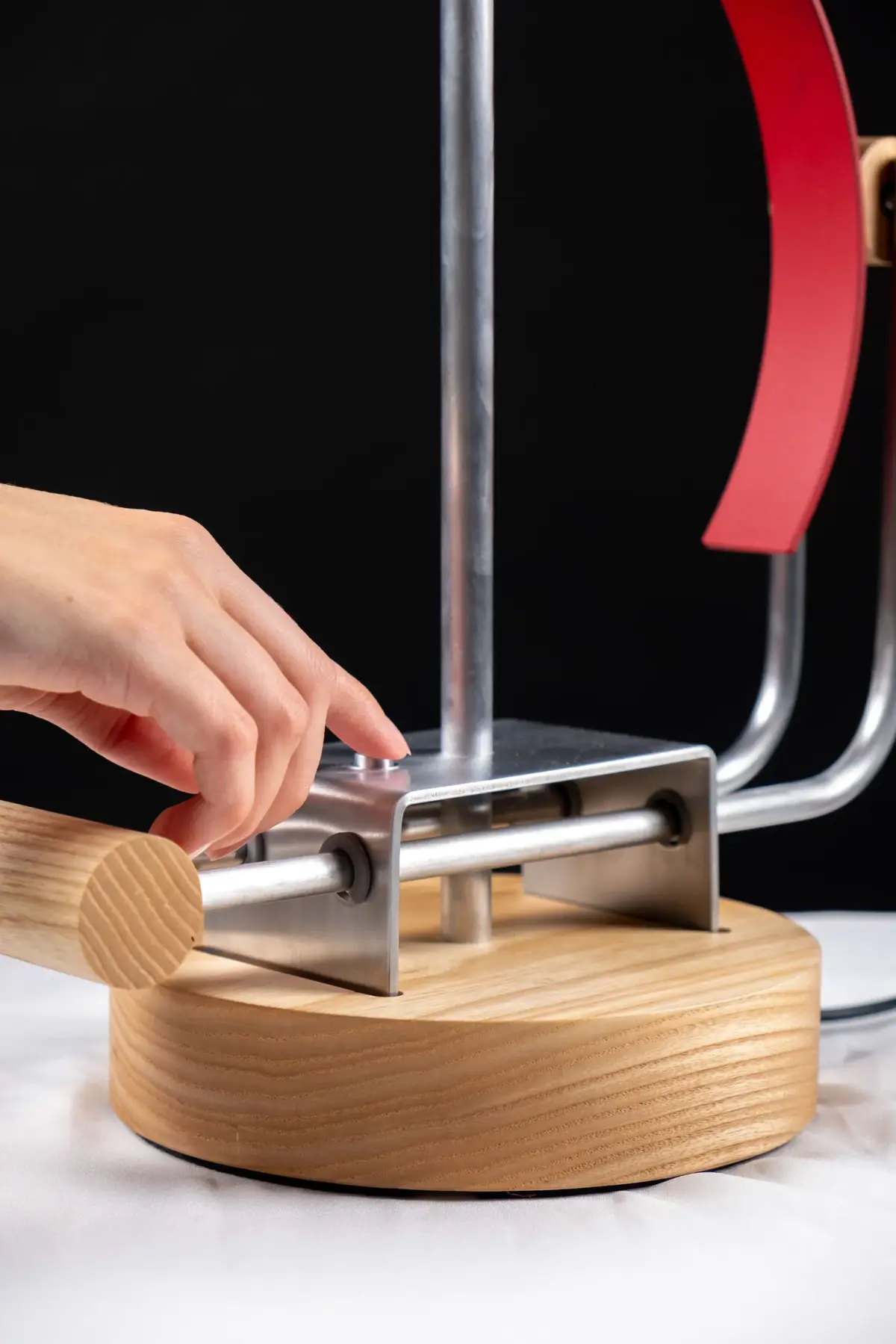
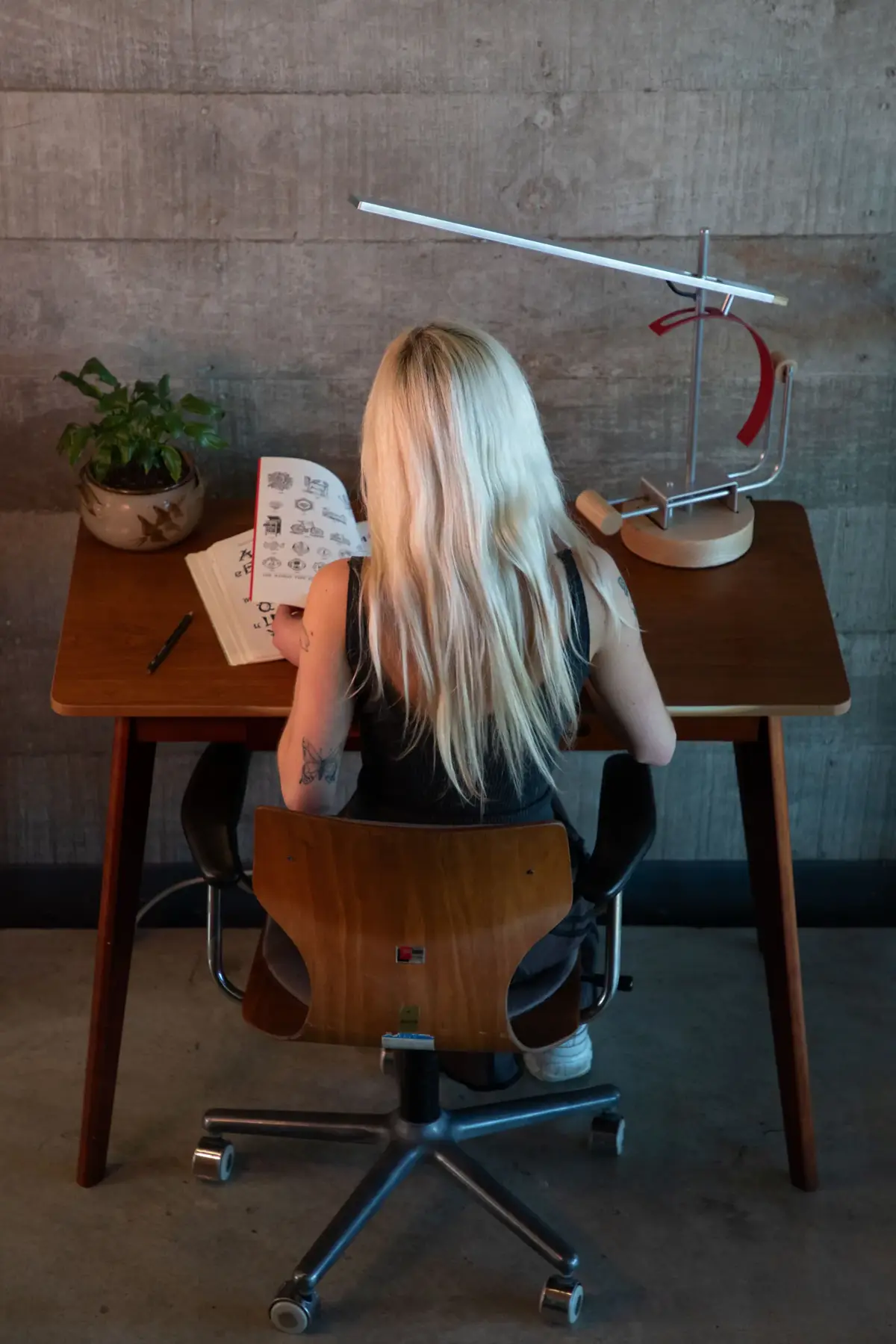
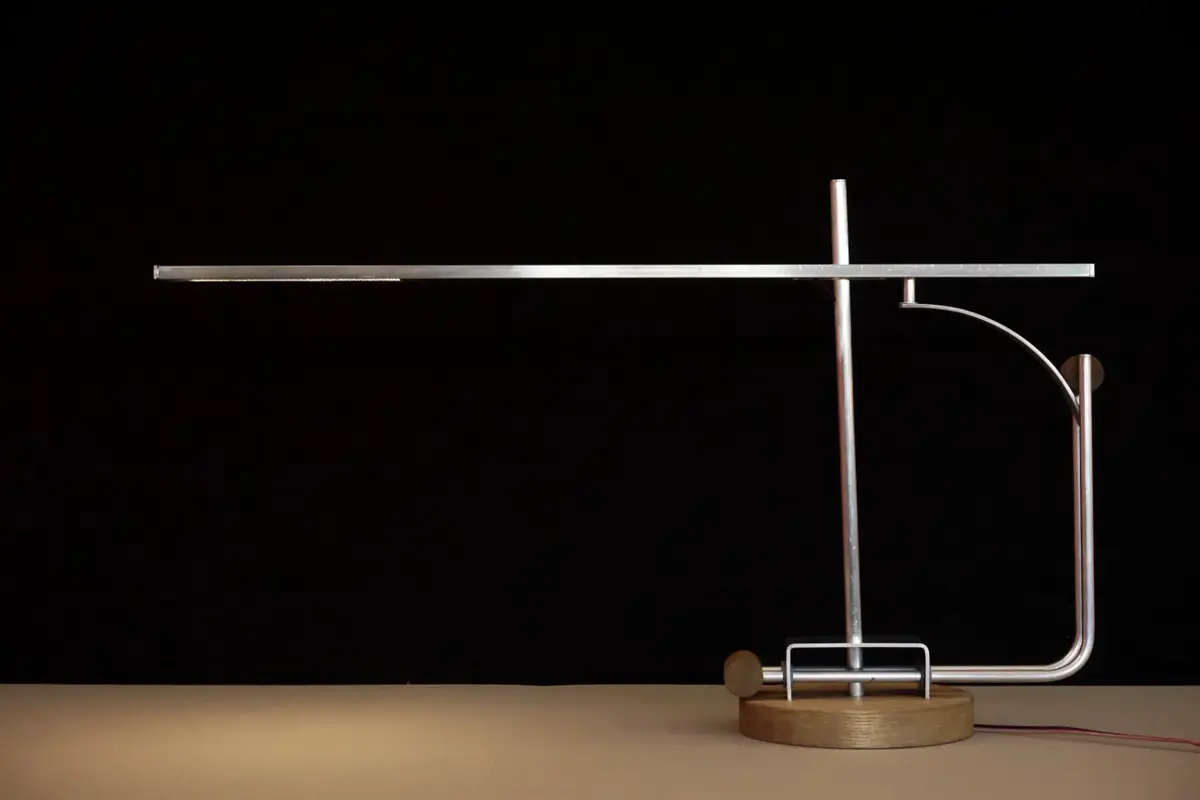
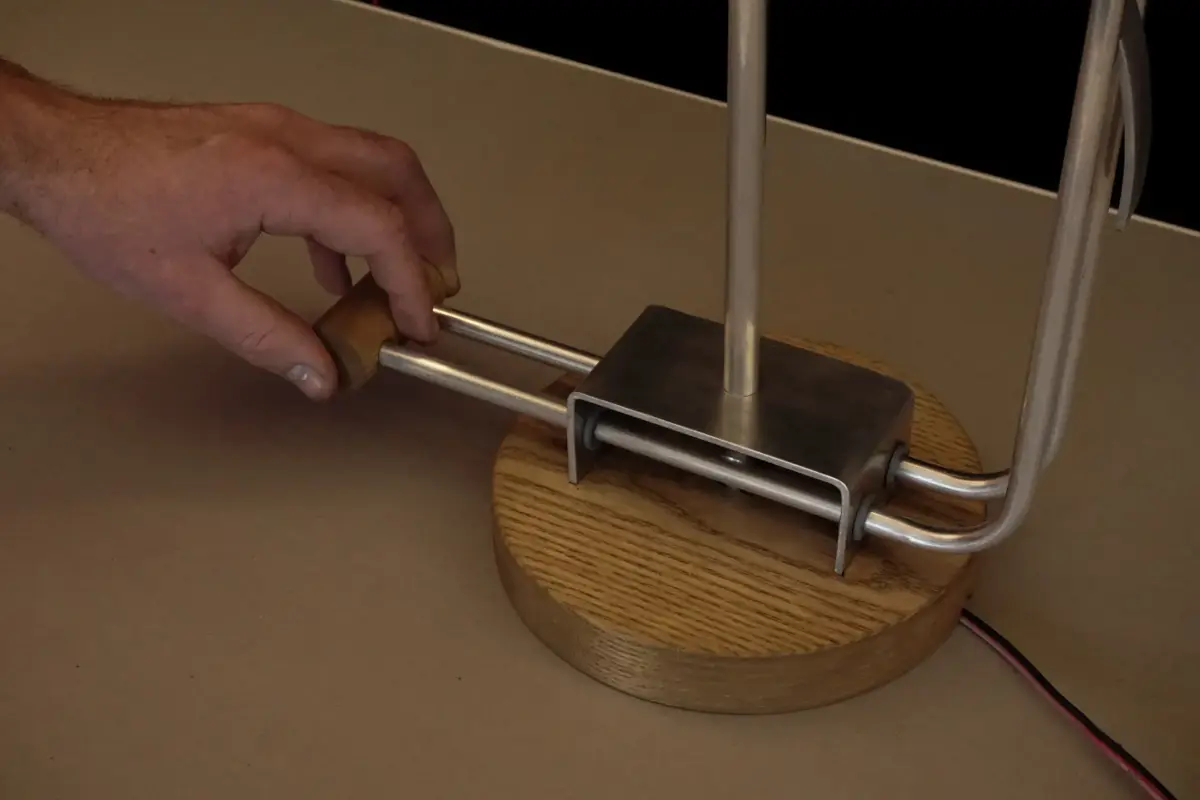
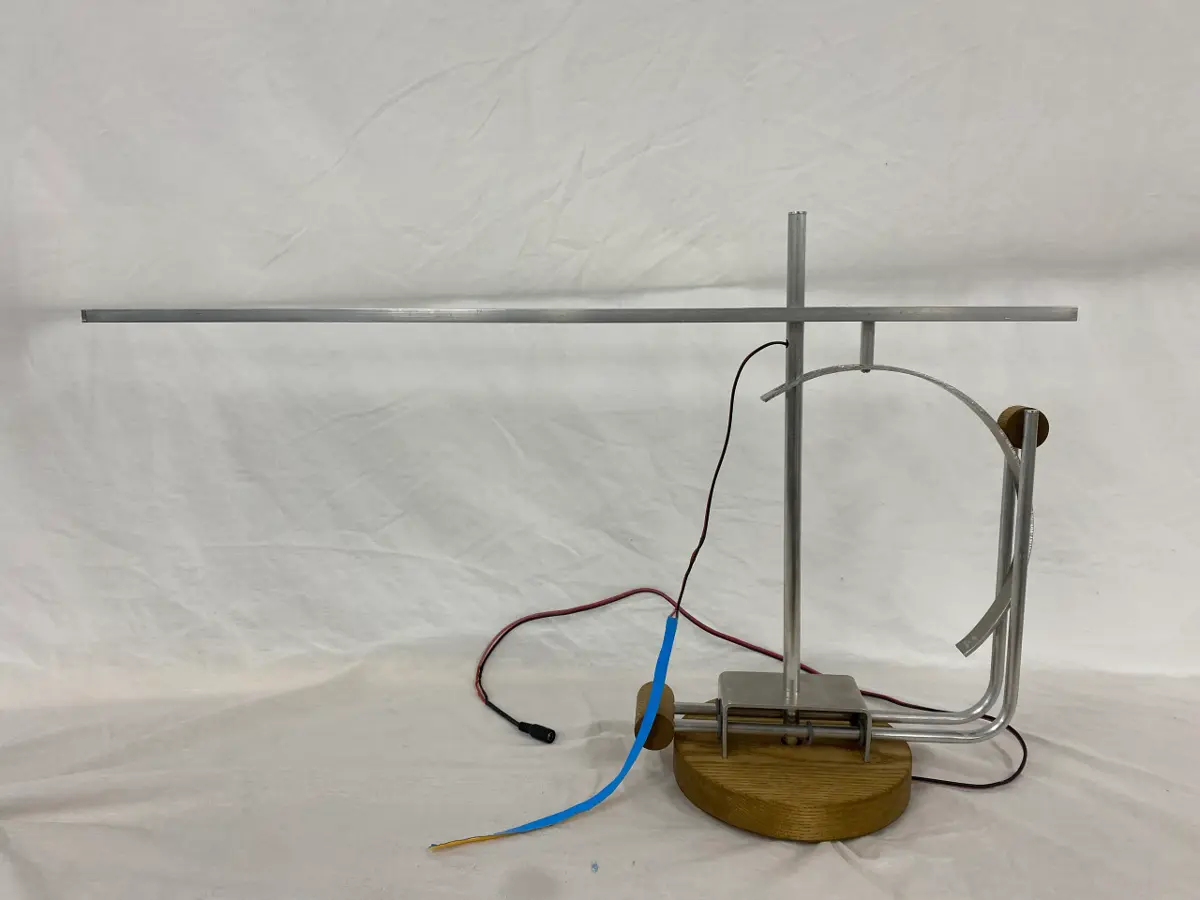
The lamp’s distinctive form and heterogeneous architecture provide a performative quality to the lamp's adjustment: the push of the adjusting handle, the rotation of a roller across an arc of travel, raising and lowering the lighting element. A curiosity and delight in the transfer of motion is experienced.
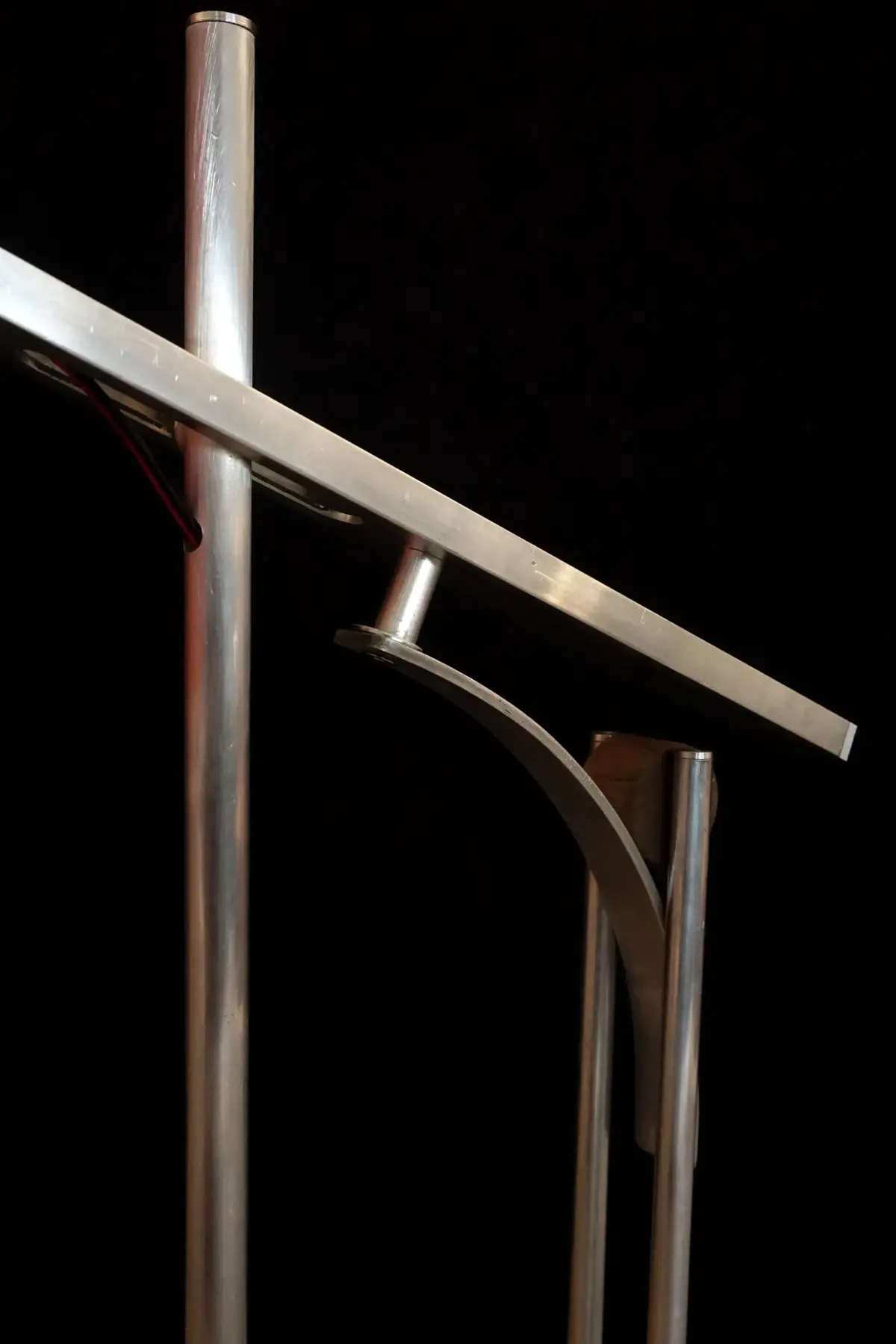
The tactility of lamp operation is assisted by materiality. American ash provides a complementary pairing with aluminium extrusions. The components are accentuated by an arc of painted steel, for which three colourways were selected to imbue personality. Steel was used for its weight density to balance the cantilevered light source, with a light aesthetic touch. The light is activated by a button placed just above the handle, thus all contact points are within reach of each other.
Tei is comfortable in its geometric arrangement through careful consideration of line weight and proportion. Inspiration was drawn from graphic design with its two-dimensional layering of form.
A commitment to longevity was part of Tei’s design strategy. Construction is clear to understand and so disassembly for repair is intuitive. This strategy supported economical batch manufacturability, allowing the ability to change out or replace components without rendering the product damaged, or unrecoverable.